Legumes
Beans Companion Planting: What to Grow With Bush and Pole Beans
By the editorial team · Updated 2026-11-19 · Every pairing linked to its source
Quick answer. The best bean companion plants are corn, which acts as a living pole in the Three Sisters, and squash or pumpkin as the ground layer. Carrots, celery, cucumbers and eggplant are traditional partners. Keep beans away from onions, garlic and chives, which charts say stunt them, and from basil and blueberries.
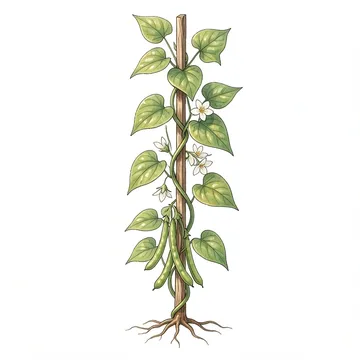
- Spacing
- 3-5 in · 8-12 cm
- Season
- Warm season
- Sun
- Full
- Rotate with
- Fabaceae
Beans are warm-season legumes for full sun. Bush beans go 3–5 in (8–12 cm) apart in rows about 36 in wide; pole beans go 6–12 in (15–30 cm) apart along supports, in rows 48–60 in apart. Those two growth habits matter for companions, because a bean that climbs and a bean that stays knee-high fit very differently into a bed.
Beans are the plant other crops are often paired with for nitrogen: their roots host bacteria that fix it, and when the roots decay in place, nearby crops benefit. Bean companion planting is as much about what beans give as what they get.
Beans companion chart
Good companions
| Plant | Why | Evidence | |
|---|---|---|---|
| Sweet corn | Corn stalks act as living poles; in trials the Three Sisters out-yielded single crops. | Proven | source |
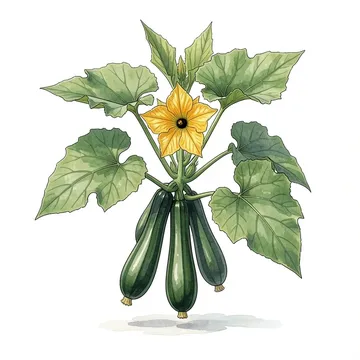
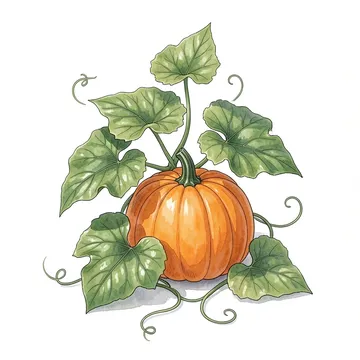
| Pumpkin | A Three Sisters partner, but in one trial squash crowded beans; give beans room. | Proven | source |
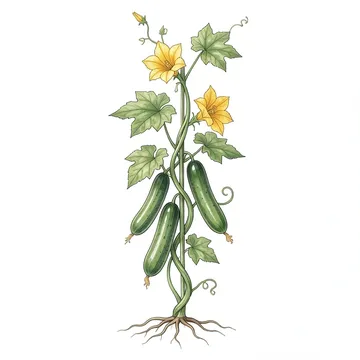
| Cucumber | Bean roots left to decay release nitrogen that later feeds cucumbers. | Practical | source |
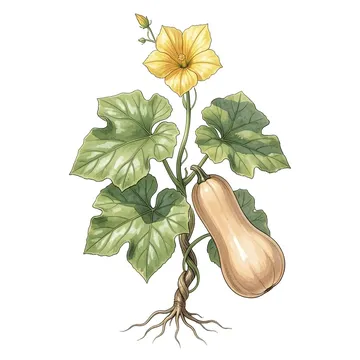
| Winter squash | Three Sisters: beans climb the corn while squash shades out weeds below. | Practical | source |
| Carrot | Carrots are a traditional bean companion; no trial yet. | Traditional | source |
| Celery | Celery is an old bean partner in garden tradition; no known reason — try it and see. | Traditional | source |
| Eggplant | Eggplant is a traditional partner for bush and pole beans; no trial yet. | Traditional | source |
| Marigold (French) | Marigold is said to deter Mexican bean beetles; an old idea, unverified. | Traditional | source |
| Nasturtium | Nasturtium is said to keep bean beetles off; gardeners swear by it, but it's unverified. | Traditional | source |
| Peas | A traditional pairing of two nitrogen-fixing legumes. | Traditional | source |
| Potato | Potatoes are a traditional bush bean companion; no trial yet. | Traditional | source |
| Radish | Radish often goes with bush beans, though some gardeners warn against it with pole beans. | Traditional | source |
| Rhubarb | UK gardeners pair rhubarb with beans; the benefits are unverified. | Traditional | source |
| Rosemary | Rosemary is said to repel bean beetles; no trial yet. | Traditional | source |
| Strawberry | Strawberries are a traditional bush bean partner; no trial evidence. | Traditional | source |
| Sweet potato | Compact bush beans stay out of the way of sprawling sweet potato vines. | Traditional | source |
| Swiss chard | Chard is a traditional bean companion; no trial yet — try it and see. | Traditional | source |
| Cilantro (Coriander) | Cilantro is traditionally said to help beans; untested. | Traditional | source |
| Sage | Sage is traditionally said to help beans; no trial yet. | Traditional | source |
Keep apart
| Plant | Why | Evidence | |
|---|---|---|---|
| Basil | Gardening tradition says basil is bad for bush and pole beans; no trial yet. | Traditional | source |
| Chives | Tradition holds the onion family holds beans back; no trial has shown it. | Traditional | source |
| Garlic | Garlic is said to stunt beans; an old warning, not trial-tested. | Traditional | source |
| Onion | Onions are said to stunt beans; a long-standing warning with no trial behind it. | Traditional | source |
| Blueberry | Beans prefer soil up to about pH 6.8; liming for them harms blueberries. | Traditional | source |
Proven Backed by a field trial or published study. Practical Recommended by a university extension or the RHS, with a clear reason. Traditional Gardener lore; no trial found yet.
What to Plant With Beans
Structure and the Three Sisters
- Corn — Proven. Corn stalks act as living poles, and the corn–bean–squash intercrop out-yielded single crops in Cornell trials. Oregon State adds that corn shade helps beans in hot summers and their roots feed at different depths.
- Pumpkin — Proven. The squash layer of the Three Sisters. An Iowa State trial found squash too competitive with beans, so space generously.
- Winter squash — Practical. The same grouping: beans climb corn while squash shades out weeds below.
Crops that use bean nitrogen
- Cucumber — Practical. Leave bean roots to decay in the soil; the nitrogen they release later benefits cucumbers.
Traditional partners from the charts
- Carrot, celery and Swiss chard appear on UF and NDSU lists.
- Eggplant and potato are listed by UC Davis and UF (potato with bush beans).
- Strawberry is listed with bush beans by UF and UC.
- Peas are another nitrogen-fixing legume; rotate the two together.
- Cilantro and sage are on an Oregon State herb sheet; rosemary is said by UF to repel bean beetles, untested.
- Marigold and nasturtium are said to deter bean beetles; neither claim is verified.
- Sweet potato pairs with compact bush beans, which won't shade its vines. Rhubarb and radish also appear in garden guides and charts.
What Not to Plant With Beans
All bean foes in our sources are Traditional:
- Onion, garlic and chives — UC Davis lists the whole onion family as incompatible, and NDSU says it stunts beans. No trial confirms this, but every chart agrees.
- Basil — the UF/IFAS chart lists basil as bad for both bush and pole beans.
- Blueberry — a soil mismatch. Legumes prefer pH up to about 6.8, and liming a bed for beans harms acid-loving blueberries.
Outside our 50, UF and UC charts also list fennel, kohlrabi and gladiolus as bad for beans.
Bush Beans vs Pole Beans: The Lists Differ
The charts don't treat the two types the same. UF lists beets, cabbage, radish and sunflower as good for bush beans but bad for pole beans, and NDSU says beets suit bush beans only. UC Davis lists celery specifically with bush beans.
The charts don't say why. Shade is one likely factor: pole beans on supports tower over a low crop at their base, while bush beans grow at about the same height as their neighbors. If you grow pole beans, keep beet and cabbage in a neighboring row rather than under the poles.
Pole Beans on Sweet Corn
Growing pole beans up sweet corn saves building a trellis and is part of the Three Sisters. Let the corn get a head start so the stalks can bear the vines. Add squash at the edges, not at the base of every corn plant, so it doesn't overrun the beans.
Free printable PDF
Get the complete companion planting chart
Print the bean card and the 50×50 matrix so you can see at a glance which crops suit bush beans, which suit pole beans, and which suit neither.
- 1-page fridge chart + full 50 × 50 matrix
- 50 plant cards with spacing and reasons
- 6 bed plans drawn to scale
- US Letter and A4
Using Bean Roots to Feed the Next Crop
Bean roots host bacteria that fix nitrogen. To get the benefit, cut the plants at soil level after harvest and leave the roots in the ground to decay. Extension sources note that the nitrogen released this way benefits cucumbers planted later, and in a Three Sisters bed the beans add nitrogen if the plants are worked into the soil afterward. Peas do the same job, so rotate both legumes together.
Does It Really Work?
The corn and squash pairings are well supported by the Cornell trials, with the Iowa caveat about squash competition. Nitrogen from decaying bean roots is a real mechanism. The onion-family warning is consistent across charts but untested, and the pest-repelling herbs are lore.
Frequently asked questions
What not to plant beside beans?
Keep onions, garlic and chives away from beans; UC Davis and NDSU say the onion family stunts them, though no trial confirms it. The UF chart also lists basil as bad for beans. Blueberries are a poor neighbor because legumes prefer near-neutral soil. Fennel, kohlrabi and gladiolus appear on charts too.
What is good to grow next to beans?
Corn is the classic partner, acting as a living pole in the Three Sisters with squash or pumpkin below. Cucumbers benefit from nitrogen released by decaying bean roots. Carrots, celery, Swiss chard, eggplant and strawberries are traditional partners listed in university charts, and bush beans also suit sweet potato beds.
Can you plant beans and tomatoes together?
The charts we use don't list tomatoes as a friend or foe of beans, so there is no documented reason to keep them apart. Bush beans can share a bed edge with tomatoes. Just avoid basil next to the beans, since UF lists it as a bad bean companion even though it suits tomatoes.
Can beans and squash grow together?
Yes, as part of the Three Sisters with corn, which out-yielded single crops in Cornell trials. The catch is competition: Iowa State found squash so vigorous that bean yields dropped. Let the beans establish on the corn first and keep the squash toward the edges.
Do bush beans and pole beans have the same companions?
Not quite. UF lists beets, cabbage, radish and sunflower as good for bush beans but bad for pole beans, and NDSU says beets suit bush beans only. Corn, cucumbers and squash work for both, and the onion family is listed as a poor neighbor for either type.