Squash family
Winter Squash Companion Plants: Three Sisters, Trap Crops and Foes
By the editorial team · Updated 2026-11-19 · Every pairing linked to its source
Quick answer. The best winter squash companion plants are nasturtiums and marigolds, which cut squash bug and cucumber beetle damage in studies, plus corn and beans in a Three Sisters bed. Borage brings bees. Don't plant squash beside potatoes, okra or sweet potatoes, and give each plant generous room so it doesn't smother its partners.
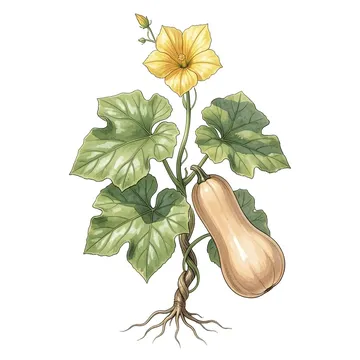
- Spacing
- 48-60 in · 120-150 cm
- Season
- Warm season
- Sun
- Full
- Rotate with
- Cucurbitaceae
Winter squash, including butternut, Hubbard and acorn types, is the biggest space-taker in most vegetable gardens. Plants need 48–60 in (120–150 cm) each, and vining types want rows about 96 in (240 cm) apart. It is a warm-season, full-sun crop that sprawls over everything near it.
That sprawl is both the opportunity and the problem. Under tall corn, squash leaves shade the soil and suppress weeds. Next to anything short, the squash simply wins. Squash bugs, cucumber beetles and squash vine borer are the pests companion planting tries to address here.
Winter squash companion chart
Good companions
| Plant | Why | Evidence | |
|---|---|---|---|
| Marigold (French) | In a farm study, marigolds around squash-family crops cut squash bug and cucumber beetle damage. | Proven | source |
| Nasturtium | In research, nasturtium cut squash bugs on squash and reduced cucumber beetle damage. | Proven | source |
| Beans (bush & pole) | Part of the Three Sisters; beans add nitrogen if worked into the soil afterward. | Practical | source |
| Sweet corn | Three Sisters: squash covers the ground under corn, though they still compete for nutrients. | Practical | source |
| Borage | A traditional pairing; borage flowers bring bees to the squash patch. | Traditional | source |
| Radish | Radish is an old winter squash companion; no trial yet. | Traditional | source |
Keep apart
| Plant | Why | Evidence | |
|---|---|---|---|
| Okra | Squash and okra both build up root-knot nematodes; keep them apart. | Traditional | source |
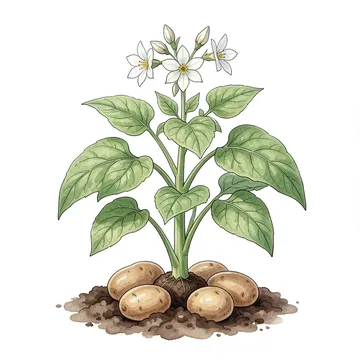
| Potato | Potatoes are a traditional no-go beside winter squash; no reason has been documented. | Traditional | source |
| Sweet potato | Both vines sprawl; they tangle and crowd each other. | Traditional | source |
Proven Backed by a field trial or published study. Practical Recommended by a university extension or the RHS, with a clear reason. Traditional Gardener lore; no trial found yet.
What to Plant With Winter Squash
Pest protection
- Nasturtium — Proven. Research cited by the University of Minnesota found nasturtium reduced squash bugs; an Iowa study also found less cucumber beetle damage on cucurbits.
- Marigold — Proven. In the same Iowa work, marigolds helped reduce squash bug and cucumber beetle damage.
Three Sisters partners
- Corn — Practical. In a Three Sisters bed, squash covers the ground beneath the corn. It does still compete with the corn for nutrients.
- Beans — Practical. Beans climb the corn and fix nitrogen, which benefits the soil if the bean plants are worked in after harvest.
Pollinators and quick crops (Traditional)
- Borage — listed with winter squash by the Almanac; Oregon State's herb list notes borage flowers attract bees.
- Radish — listed by the Almanac; sow it early and pull it before the vines arrive.
Plant the flowers at the edges rather than under the vines, which would bury them within weeks.
What Not to Plant Beside Squash
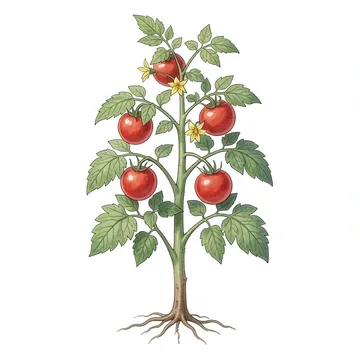
- Potato — Traditional. UC Davis and UF charts list potato as incompatible with squash and pumpkin.
- Okra — Traditional. Garden advice says squash and okra both build up root-knot nematodes, so avoid pairing them or growing one after the other.
- Sweet potato — Traditional. Both crops sprawl. The vines tangle, crowd each other and make harvest hard.
The squash family also includes cucumbers, zucchini, melons and pumpkins. They share pests, so rotate all cucurbits away from the same bed together rather than following one with another.
Growing Squash in a Three Sisters Bed
The Three Sisters (corn, beans and squash) is the best-known companion system for winter squash, but it needs room. Iowa State trials found squash so competitive that bean yields dropped. The fix is spacing: plant the squash at the edges or in the gaps between corn hills, not right at the base of every bean.
Let the corn and beans get established before the squash leaves spread across the bed, and use the full 48–60 in (120–150 cm) per squash plant even in a mixed bed.
Blue Hubbard as a Trap Crop
Blue Hubbard squash is attractive to cucumber beetles, squash bugs and squash vine borer. Gardeners and growers use that by planting a few Blue Hubbard plants away from the main squash patch, so the pests gather there instead. You then deal with the pests on the trap plants. It works only if the trap plants are a separate group, not mixed through the bed you're trying to protect.
Free printable PDF
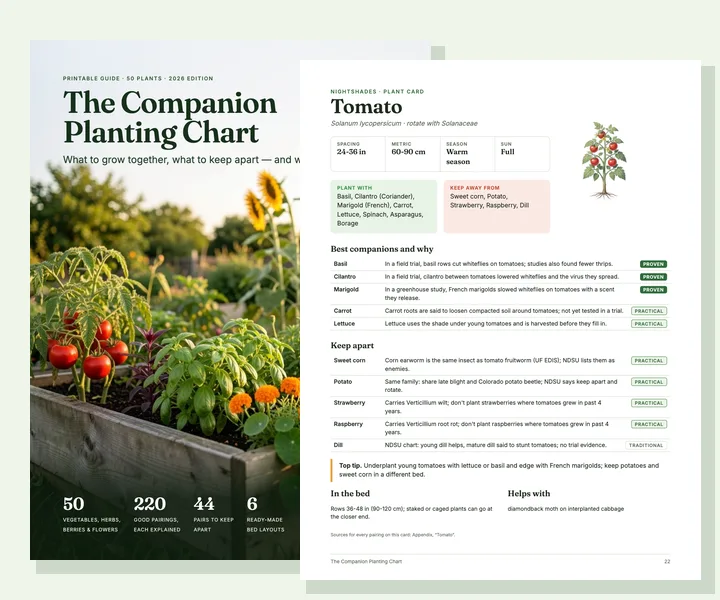
Get the complete companion planting chart
The bed plans in the PDF are drawn to scale, so you can see how much room winter squash really takes before you sow anything around it.
- 1-page fridge chart + full 50 × 50 matrix
- 50 plant cards with spacing and reasons
- 6 bed plans drawn to scale
- US Letter and A4
Rotating Squash Away From All Cucurbits
Winter squash, pumpkins, zucchini, cucumbers and melons are one family, and they share cucumber beetles, squash bugs and squash vine borer. Our notes on winter squash are blunt: rotate away from all cucurbits.
In practice:
- Don't plant squash in a bed that held any cucurbit last year.
- If you use Blue Hubbard as a trap crop, count those plants in the rotation too.
- Avoid a bed where okra grew recently, because both crops build up root-knot nematodes.
A four-bed rotation with a dedicated cucurbit bed makes this easy to track.
Does It Really Work?
Two parts hold up: nasturtium and marigold reduced squash pests in studies, and the Three Sisters is a working system as long as the squash doesn't crowd the beans. Borage and radish are chart tradition. The foe list is tradition too, but it matches common sense about space and nematodes.
Frequently asked questions
What should you not plant beside squash?
Keep winter squash away from potatoes, which UC Davis and UF list as incompatible, and from okra, because both crops build up root-knot nematodes. Sweet potatoes are a poor neighbor because both vines sprawl and tangle. Also rotate squash away from beds where any squash-family crop grew last year.
What are some good companion plants for winter squash?
Nasturtiums and marigolds are the best-supported, since they reduced squash bug and cucumber beetle damage in studies. Corn and beans make a Three Sisters bed with squash as the ground cover. Borage brings bees for pollination, and radish can be sown early along the edges and harvested before the vines arrive.
Do butternut squash plants need to climb?
No. Butternut and other winter squash grow fine sprawling on the ground, which is how they work in a Three Sisters bed, covering the soil under the corn. The cost is space: plan 48–60 in (120–150 cm) per plant and rows about 96 in (240 cm) apart for vining types.
Why did my beans fail in a Three Sisters bed?
The squash probably outcompeted them. Iowa State trials found squash so vigorous in Three Sisters plantings that bean yields dropped. Let the beans establish before the squash spreads, and plant squash at the edges or between corn hills rather than right against the beans.