Nightshades
Potato Companion Plants: Good Neighbors, Bad Neighbors and Rotation
By the editorial team · Updated 2026-11-19 · Every pairing linked to its source
Quick answer. Potato companion plants are mostly traditional: beans, cabbage-family crops, corn, onions and early peas appear in university charts. The firm rule is what to keep away. Grow potatoes well apart from tomatoes because of late blight, keep strawberries and raspberries off old potato ground, and rotate three years out of nightshades.
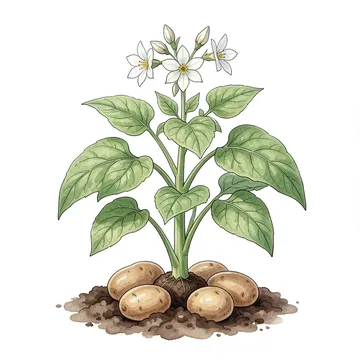
- Spacing
- 12 in · 30 cm
- Season
- Cool season
- Sun
- Full
- Rotate with
- Solanaceae
Potatoes are a cool-season nightshade. Seed pieces go 2–3 in deep, about 12 in (30 cm) apart, in rows roughly 36 in (90 cm) wide so there is room to hill soil up around the stems. That hilling is why potato beds are hard to interplant: anything growing close to the row gets buried or disturbed.
For potatoes, the useful companion question is really a disease question. Late blight, Colorado potato beetle and Verticillium all move between potatoes and their relatives, so placement and rotation do more than any flower you add.
Potato companion chart
Good companions
| Plant | Why | Evidence | |
|---|---|---|---|
| Beans (bush & pole) | A classic potato partner in garden tradition; no trial yet — try it and see. | Traditional | source |
| Cabbage | Gardeners often pair the cabbage family with potatoes; no trial behind it yet. | Traditional | source |
| Sweet corn | Corn is a traditional potato companion; untested, so judge by your harvest. | Traditional | source |
| Onion | Onions are an old potato companion; no trial yet, but they take little room. | Traditional | source |
| Peas | A traditional pairing, best with early potatoes; no trial evidence. | Traditional | source |
| Parsley | Said to help potatoes in gardening tradition; no trial yet. | Traditional | source |
| Oregano | Traditionally said to help potatoes; worth trying, not yet tested. | Traditional | source |
| Marigold (French) | Marigolds are widely recommended near potatoes; no trial yet — plant a few and watch. | Traditional | source |
Keep apart
| Plant | Why | Evidence | |
|---|---|---|---|
| Tomato | Potatoes share late blight with tomatoes; blight in one spreads to the other. | Practical | source |
| Strawberry | Potatoes host Verticillium; keep strawberries off ground where potatoes grew. | Practical | source |
| Raspberry | Potatoes host Verticillium; keep raspberries off former potato ground for four to five years. | Practical | source |
| Cantaloupe (melon) | Traditionally kept away from potatoes; no reason documented, so it is a cautious choice. | Traditional | source |
| Cucumber | Gardeners have long kept cucumbers away from potatoes; no known reason, but easy to separate. | Traditional | source |
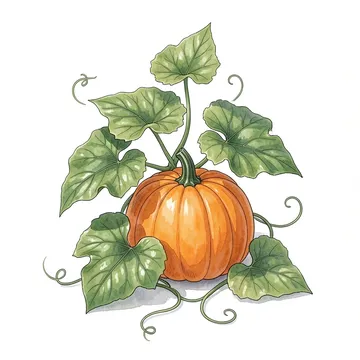
| Pumpkin | Gardeners traditionally keep pumpkins away from potatoes; the reason has never been shown. | Traditional | source |
| Sunflower | Sunflowers are said to hold back potatoes; that effect hasn't been shown for potatoes. | Traditional | source |
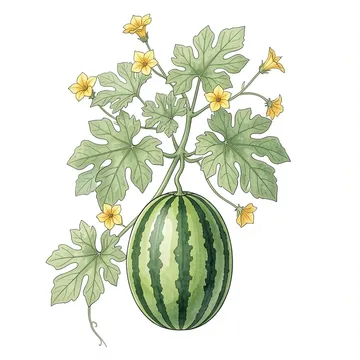
| Watermelon | Traditionally kept apart from potatoes; no reason documented, so space them if you can. | Traditional | source |
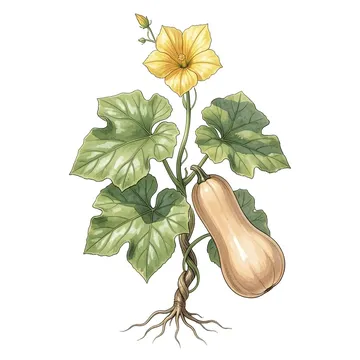
| Winter squash | A traditional warning keeps winter squash away from potatoes; no mechanism is known. | Traditional | source |
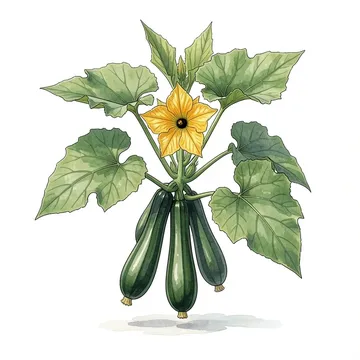
| Zucchini (summer squash) | Long called a poor potato neighbor; no known reason, so plant apart to be safe. | Traditional | source |
Proven Backed by a field trial or published study. Practical Recommended by a university extension or the RHS, with a clear reason. Traditional Gardener lore; no trial found yet.
What to Plant With Potatoes
No potato companion has trial support in our sources. These pairings come from the UC Davis, UF/IFAS, West Virginia and Oregon State charts, so all are Traditional:
- Beans — listed by UC Davis and UF. Bush beans stay compact and don't get in the way of hilling.
- Cabbage and the cabbage family — listed by both UC Davis and UF.
- Corn — listed by UC Davis and UF as a potato companion.
- Onion — listed in the UF/IFAS chart.
- Peas — UF lists them with early potatoes only. UC Davis disagrees and lists potato as incompatible with peas, so treat this as a toss-up.
- Parsley and oregano — an Oregon State herb sheet lists both as enhancing potatoes.
- Marigold — on the UF, UC and WVU charts.
If you want one practical arrangement, put a row of bush beans or onions at the edge of the potato bed, outside the area you'll hill.
What Not to Plant With Potatoes
Evidence-based foes (Practical)
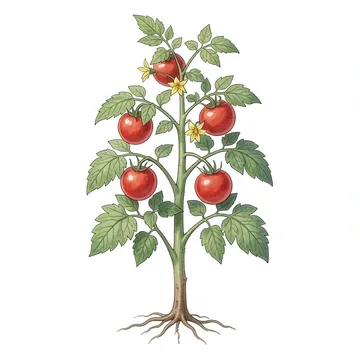
- Tomato — the most important one. NDSU notes that potatoes and tomatoes share late blight, and blight in one spreads to the other. They also share Colorado potato beetle.
- Strawberry — potatoes host Verticillium, and extension advice is to keep strawberries off former potato ground.
- Raspberry — for the same reason, keep raspberries off old potato ground for four to five years.
Chart foes (Traditional)
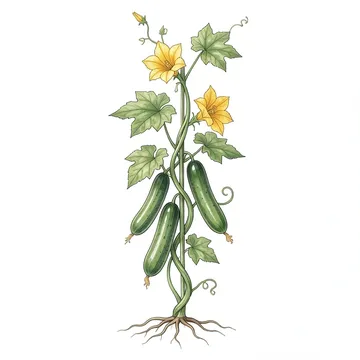
- The squash family: cucumber, zucchini, pumpkin and winter squash are listed as incompatible by UC Davis and UF, with no mechanism given.
- Melons: cantaloupe and watermelon appear as bad companions in the UF chart.
- Sunflower — UC Davis and UF list it as incompatible, but potato-specific allelopathy has not been demonstrated.
Outside our 50, black walnut injures potatoes (Purdue, UW). UF and UC charts also list fennel, kohlrabi, rutabaga, turnip and parsnip as bad neighbors (Traditional).
Crop Rotation for Potatoes
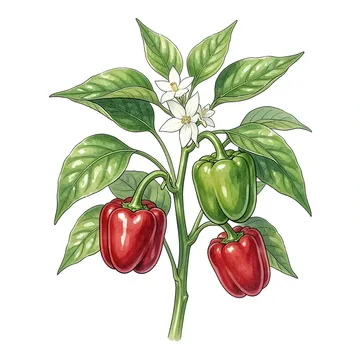
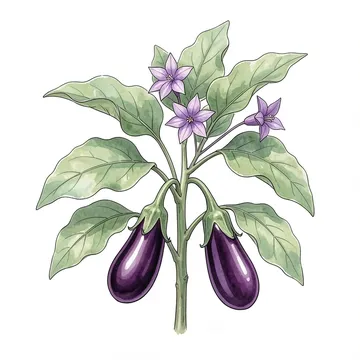
NDSU recommends three years out of the nightshade family after potatoes. That means no tomatoes, peppers, eggplant or potatoes on that ground for three seasons. Sweet potato is not a nightshade (it belongs to the morning glory family), so it doesn't count against the rule.
The same ground should also stay free of strawberries and raspberries for four to five years because of Verticillium. Good follow-on crops from the charts are beans, peas, onions and cabbage-family plants. See the crop rotation guide for a full four-bed sequence.
Do Marigolds Keep Potato Beetles Away?
Probably not. Marigolds are often said to repel Colorado potato beetle, but studies including Moreau et al. (2006) found no effect. A University of Minnesota trial also found that eggplant planted as a beetle trap crop did not protect potatoes. For beetles, hand-picking and rotation remain the dependable tools.
Free printable PDF
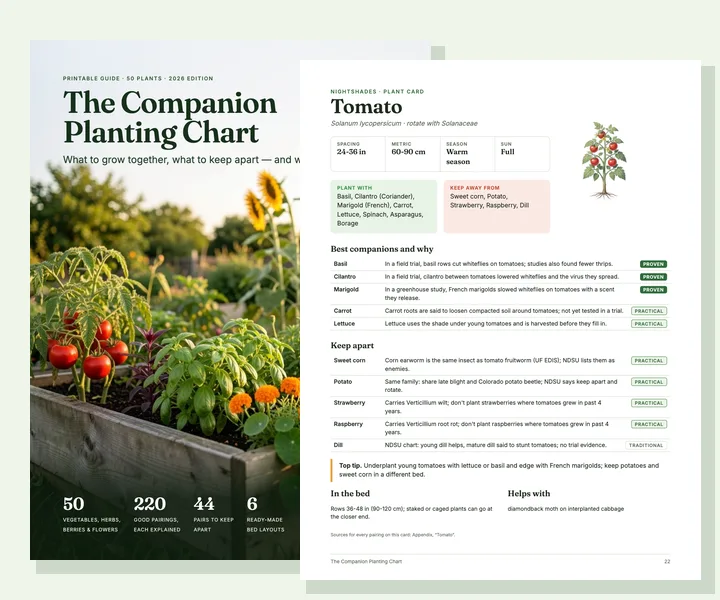
Get the complete companion planting chart
The rotation sheet in the PDF maps where potatoes can go for the next three years, so you never put tomatoes on blighted ground by accident.
- 1-page fridge chart + full 50 × 50 matrix
- 50 plant cards with spacing and reasons
- 6 bed plans drawn to scale
- US Letter and A4
Where Companions Fit Around the Hilling Zone
Potato rows are about 36 in (90 cm) apart precisely so you can draw soil up around the stems. That strip along each row is off-limits for companions, because hilling would bury them.
Use the space outside it:
- A row of bush beans or onions down the middle of the path between potato rows, if the rows are wide enough.
- Cabbage-family transplants in a neighboring bed rather than the same one.
- Parsley and oregano at the ends of the rows, where hilling stops.
Keep sunflowers, squash and melons out of the potato bed altogether; the charts list them as incompatible, and they would sprawl over the hills anyway.
Does It Really Work?
For potatoes, the "what not to plant" half is the reliable half. Keeping potatoes and tomatoes apart and rotating out of nightshades rests on documented shared diseases. The "what to plant" list is chart tradition with no trials, and the best-known claim, marigolds against potato beetle, has been tested and failed.
Frequently asked questions
What crops to rotate with potatoes?
After potatoes, NDSU recommends three years without any nightshade crop, so skip tomatoes, peppers, eggplant and potatoes there. Beans, peas, onions and cabbage-family crops are good follow-ons. Also keep strawberries and raspberries off former potato ground for four to five years, because potatoes host Verticillium, which damages both berries.
Can I reuse soil that I grew potatoes in?
Yes, for crops outside the nightshade family. Beans, peas, onions or cabbage-family plants can follow potatoes. Avoid tomatoes, peppers, eggplant and more potatoes for three years, as NDSU advises, and avoid strawberries and raspberries for four to five years, because diseases like late blight and Verticillium can carry over.
What cannot be planted near potatoes?
Tomatoes are the main one: they share late blight and Colorado potato beetle with potatoes. Strawberries and raspberries shouldn't go on old potato ground because of Verticillium. Charts also list squash, pumpkin, cucumber, melons, sunflower, fennel, kohlrabi, turnip and parsnip as poor neighbors, though no mechanism has been shown for those.
What is the best companion plant for potatoes?
No potato companion has trial support, so the honest answer is a low, easy neighbor that stays out of the way of hilling. Bush beans and onions are both listed in university charts and fit along the bed edge. Cabbage-family crops and corn are also charted as compatible.