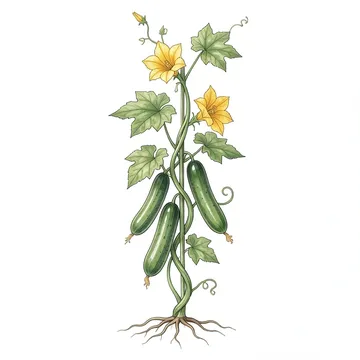
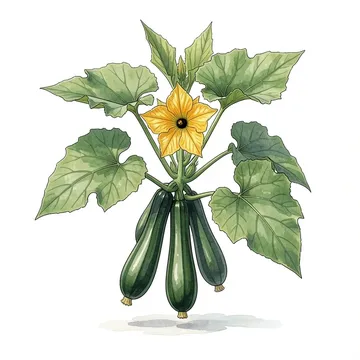
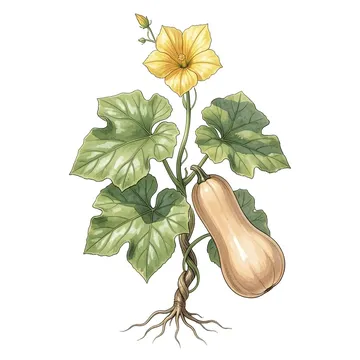
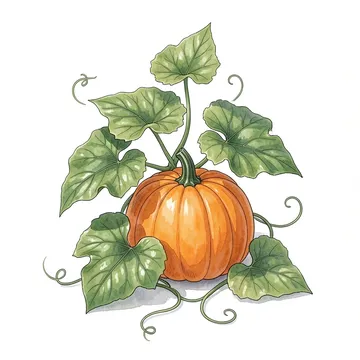
Squash family
Watermelon Companion Plants: Bees, Space and What to Avoid
By the editorial team · Updated 2026-11-19 · Every pairing linked to its source
Quick answer. The most useful watermelon companion plant is borage, whose flowers keep bees visiting so the melons get pollinated. Nasturtium, corn and radish are listed in the UF chart as melon companions. Keep watermelon away from potatoes, and give each vine 48–60 in (120–150 cm) so companions stay at the edges.
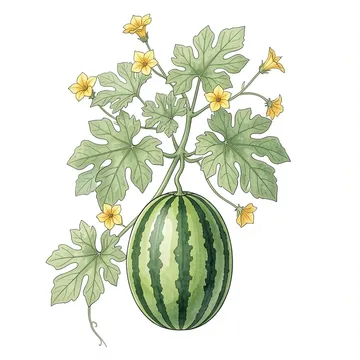
- Spacing
- 48-60 in · 120-150 cm
- Season
- Warm season
- Sun
- Full
- Rotate with
- Cucurbitaceae
Watermelon is a warm-season, full-sun vine with big space needs: 48–60 in (120–150 cm) per plant and rows 72–90 in (180–230 cm) apart. Like other melons, its flowers are insect-pollinated, so a vine with no bee visits sets little or no fruit.
Compared with tomatoes or cabbage, watermelon has thin companion evidence. Beyond sharing space the way Three Sisters crops do, most watermelon pairings come from extension charts with no trial behind them. That makes it a short, honest list, and the plant that matters most is a flower.
Watermelon companion chart
Good companions
| Plant | Why | Evidence | |
|---|---|---|---|
| Borage | A traditional melon partner; borage flowers draw bees for pollination. | Traditional | source |
| Sweet corn | Corn is a traditional melon companion; no trial yet. | Traditional | source |
| Nasturtium | A traditional pairing; nasturtium's squash bug results came from squash, not melons. | Traditional | source |
| Radish | An old melon companion; no trial yet — try it and see. | Traditional | source |
Keep apart
| Plant | Why | Evidence | |
|---|---|---|---|
| Potato | Traditionally kept away from potatoes; no reason documented, so space them if you can. | Traditional | source |
Proven Backed by a field trial or published study. Practical Recommended by a university extension or the RHS, with a clear reason. Traditional Gardener lore; no trial found yet.
What to Plant With Watermelon
Every watermelon companion in our sources is Traditional, meaning a chart lists it but no trial has tested it on watermelon.
- Borage — Oregon State's herb list singles out borage for melons, and its flowers attract bees. Since watermelon needs insect pollination, this is the pairing with the clearest reason behind it.
- Nasturtium — the UF chart lists it with melons. The squash bug research behind nasturtium was done on squash, not melon, so treat any pest benefit on watermelon as unconfirmed.
- Corn — listed with melons in the UF chart. Tall corn on the north side of the patch won't shade the vines.
- Radish — listed with melons in the UF chart. Radishes sown in spring are pulled long before the vines spread across the bed.
If you only add one companion, make it borage at the corners of the patch.
What Not to Plant Next to Watermelon
- Potato — Traditional. The UF chart lists potato as a bad companion for melons. No mechanism is documented, but potato hilling and sprawling melon vines don't share a bed well.
That's the only named foe in our sources. The bigger practical issue is family: watermelon is a cucurbit, like cucumber, pumpkin, zucchini and cantaloupe. These crops share pests and should be rotated as one group, so don't plant watermelon in a bed where any of them grew last season.
Bringing Bees to the Melon Patch
Because watermelon flowers rely on insects, the real job of a watermelon companion is to keep pollinators nearby through the flowering period. Borage is the one our sources point to. Plant it at the corners or along one edge so it flowers in the same weeks as the melons and doesn't sit under the vines.
Avoid spraying the patch with anything that harms bees while the melons are flowering. A companion flower can't help if the visitors are driven away.
How Far Apart to Plant Watermelon From Other Plants
Use the watermelon's own spacing as the starting point: 48–60 in (120–150 cm) between plants and 72–90 in (180–230 cm) between rows. Companions then go outside that footprint:
- Radish: sow in the bare ground early, harvest before the vines run.
- Borage and nasturtium: at the edges, where the vines won't cover them.
- Corn: on the north side, so its shade falls away from the melons.
Trying to fit low crops between watermelon vines usually ends with the companions buried under leaves by midsummer.
Free printable PDF
Get the complete companion planting chart
Keep the one-page fridge chart by the back door so you can check watermelon and every other melon-patch neighbor at a glance.
- 1-page fridge chart + full 50 × 50 matrix
- 50 plant cards with spacing and reasons
- 6 bed plans drawn to scale
- US Letter and A4
Can Watermelon Share Space Like the Three Sisters?
Our notes on watermelon are frank: there are few sourced companions beyond Three Sisters-style space sharing. Corn is the obvious candidate, since the UF chart lists it with melons. A block of corn with watermelon vines running beneath follows the same idea as the classic corn–bean–squash bed.
Keep two cautions in mind. Corn casts shade, and watermelon needs full sun, so plant the corn on the north side rather than in the middle of the patch. And watermelon needs 48–60 in (120–150 cm) per plant, so this works only in a bed big enough for both.
Does It Really Work?
For watermelon, mostly tradition. No companion in our sources has a watermelon-specific trial. Borage has the most sensible mechanism, because pollination is a real limit on melon yield. Use companions here for bees and good use of space, and rely on rotation and spacing for everything else. Our evidence guide explains the labels.
Frequently asked questions
What is the best partner for watermelon?
Borage is the best partner for watermelon. Oregon State's herb list pairs it with melons, and its flowers attract bees, which watermelon depends on for pollination. Nasturtium, corn and radish are also listed with melons in the UF chart, though none has been tested on watermelon in a trial.
What should you not plant next to watermelon?
The UF chart lists potato as a bad companion for melons, including watermelon. Also avoid planting watermelon where cucumbers, squash, pumpkins or other melons grew last year, since these cucurbits share pests and should be rotated as one family. Otherwise, the main limit is space for the sprawling vines.
How far apart should I plant watermelon from other plants?
Space watermelon plants 48–60 in (120–150 cm) apart, with rows 72–90 in (180–230 cm) apart. Place companions outside that area: borage and nasturtium at the edges, corn on the north side so it doesn't shade the melons, and quick radishes in spring before the vines spread.
Can I plant watermelon and cantaloupe together?
Yes, they share the same companion lists in the charts we use, such as borage, nasturtium, corn and radish, and the same foe, potato. But they are both cucurbits, so they share pests and should be rotated together. Give each its full spacing so the vines don't compete.