Flowers
Nasturtium Companion Plants
By the editorial team · Updated 2026-11-19 · Every pairing linked to its source
Quick answer. Nasturtium works as a sacrificial trap crop. In an Iowa trial it cut squash bugs on zucchini and caterpillar damage on broccoli and cabbage, and extension sources use it to draw aphids and flea beetles off brassicas. Charts list no foe. Check it often and remove heavily infested plants before pests move on.
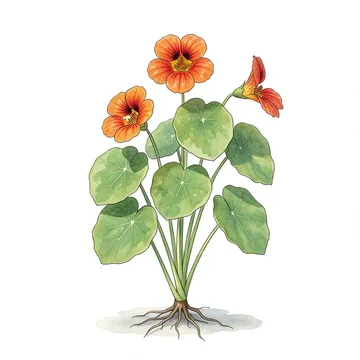
- Spacing
- 10-12 in · 25-30 cm
- Season
- Warm season
- Sun
- Full
- Rotate with
- Tropaeolaceae
Nasturtium companion plants advice often says nasturtium repels aphids and cabbage loopers. It does the opposite. Nasturtiums host black bean aphid, and cabbage white butterflies lay eggs on them. That is exactly why they can help: pests that settle on the nasturtium are not on your crop.
The RHS calls the evidence for this limited, and much of it is anecdotal. But an Iowa State farm trial found useful results on squash and broccoli, and Utah State and Washington State extension material describes nasturtium as a trap for brassica pests. Use it as bait, check it, and pull it when it is overrun.
Nasturtium companion chart
Good companions
| Plant | Why | Evidence | |
|---|---|---|---|
| Zucchini (summer squash) | In a farm trial, nasturtium cut squash bugs on zucchini about as well as marigold. | Proven | source |
| Winter squash | In a farm study, nasturtium reduced squash bugs and cucumber beetle damage on squash. | Proven | source |
| Pumpkin | In a farm study, nasturtium reduced squash bug and beetle damage on squash-family crops. | Proven | source |
| Cucumber | In a farm study, nasturtium reduced squash bug and cucumber beetle damage on cucumber-family crops. | Proven | source |
| Cabbage | Cabbage white butterflies lay eggs on nasturtium, so it can work as a sacrificial trap. | Proven | source |
| Broccoli | In a field study, broccoli grown with nasturtium had less looper and cabbageworm damage. | Proven | source |
| Kale | Nasturtium acts as a trap crop, drawing aphids and flea beetles off kale. | Practical | source |
| Cauliflower | Nasturtium acts as a trap crop, drawing aphids and flea beetles off cauliflower. | Practical | source |
| Brussels sprouts | Nasturtium acts as a trap crop, drawing aphids and flea beetles off Brussels sprouts. | Practical | source |
| Radish | Radish is a traditional nasturtium companion; no trial yet. | Traditional | source |
| Tomato | Tomatoes are a classic nasturtium partner; untested outdoors — try it and see. | Traditional | source |
| Beans (bush & pole) | Beans are a traditional nasturtium partner; the idea that it deters bean beetles is unverified. | Traditional | source |
| Watermelon | Watermelon is a traditional nasturtium partner; no trial yet with melons. | Traditional | source |
| Cantaloupe (melon) | Cantaloupe is a traditional nasturtium partner; the pest trials were on squash, not melons. | Traditional | source |
| Celery | Celery is an old nasturtium companion; no trial evidence. | Traditional | source |
| Strawberry | Strawberries are a traditional nasturtium partner; no trial yet. | Traditional | source |
| Raspberry | Nasturtium is said to draw pollinators and predatory insects to raspberries; anecdotal. | Traditional | source |
Keep apart
No well-documented conflicts. See the notes below for general cautions.
Proven Backed by a field trial or published study. Practical Recommended by a university extension or the RHS, with a clear reason. Traditional Gardener lore; no trial found yet.
What to Plant With Nasturtium
Squash family
- Zucchini — Proven. In an Iowa State farm trial, nasturtium reduced squash bugs on zucchini about as well as marigold. The trial was small.
- Cucumber, winter squash and pumpkin — Proven, based on research cited by the University of Minnesota showing fewer squash bugs and, in the Iowa work, less cucumber beetle damage.
Cabbage family
- Broccoli and cabbage — Proven. The Iowa study found nasturtium reduced cabbage looper and imported cabbageworm damage.
- Kale, cauliflower and Brussels sprouts — Practical. Extension material from Utah State and Washington State uses nasturtium to pull aphids and flea beetles off these crops.
Chart listings (Traditional): radish, tomato, beans, watermelon, cantaloupe, celery, strawberry and raspberry. For melons, note that the squash bug research was on squash, not melons.
What Not to Plant With Nasturtium
No chart we used lists a plant that should not grow near nasturtium. The cautions come from how it works:
- Beans and blackfly. Nasturtium hosts black bean aphid. Planted right beside beans, a heavily infested nasturtium can become a source of aphids rather than a sink. Keep an eye on it and remove it once colonies build up.
- Regional differences. A study in The Canadian Entomologist found some black bean aphid populations live on nasturtium and others do not, so its trap value against that aphid varies by region.
- Space. Trailing types reach 2.5 m (RHS) and can smother low crops. Choose bush types, about 30 cm tall, for tight beds.
None of these is a reason to skip nasturtium. They are reasons to place it at the bed edge, pick bush types for small spaces, and treat it as a plant you will check and replace rather than one you plant and forget.
How to Use Nasturtium as a Trap Crop
The top tip from our sources: use nasturtium as a sacrificial plant, not a repellent.
- Plant nasturtiums at the edge of the squash or brassica bed, not tight against the crop.
- Thin to about 12 in (30 cm) apart.
- Check the leaves every few days for aphid colonies and caterpillar eggs.
- When a plant is heavily infested, pull it and bag it before the pests move on to the crop.
- Sow a few more to keep the trap going.
Nasturtiums flower best on poor soil, according to the RHS, so do not feed them heavily. Single-flowered, nectar-rich types also attract bees and predatory insects to the bed. The pest control companions guide pairs nasturtium with other traps such as arugula.
Nasturtium is a warm-season plant, so sow it once the soil has warmed, around the same time as squash. For spring brassicas that are planted earlier, arugula can cover the first weeks, and nasturtium can take over the trap job as the season warms.
Free printable PDF
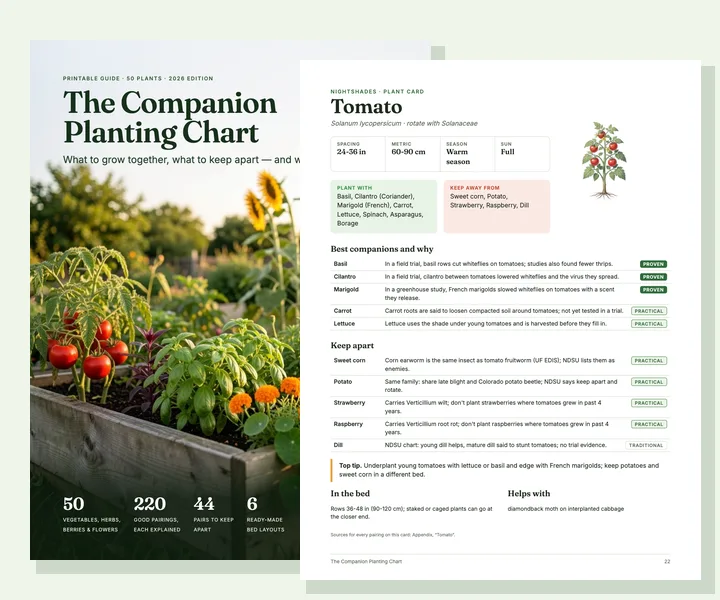
Get the complete companion planting chart
The PDF's pest-to-protector table puts nasturtium next to every pest it traps, with a check-and-remove reminder you can print and keep by the brassica bed.
- 1-page fridge chart + full 50 × 50 matrix
- 50 plant cards with spacing and reasons
- 6 bed plans drawn to scale
- US Letter and A4
Nasturtium Companion Planting Chart
Does It Really Work?
Sometimes, and only as a trap. The Iowa trial and extension material support nasturtium near squash and brassicas, but the trial was small and the RHS says scientific evidence remains limited. Charts that call it a repellent have it backwards. If you plant it, commit to checking it; an unchecked trap crop just raises more pests.
Frequently asked questions
What should not be planted next to nasturtiums?
No chart we checked lists a specific foe for nasturtium. Be careful beside beans, though: nasturtium hosts black bean aphid, so an overrun plant can spread aphids. Remove infested nasturtiums promptly, and choose compact bush types where trailing stems would smother low crops.
Can nasturtiums and marigolds be planted together?
Yes. Neither is listed as a foe of the other, and both were tested around zucchini in the same Iowa State trial, where each reduced squash bugs. Planting both at the edge of a squash bed gives you two different trap and pollinator plants.
How many nasturtiums should I plant together?
Thin nasturtiums to about 12 in (30 cm) apart. As a trap crop, a short row along the bed edge is enough to start, with a few spare seeds sown later so you can replace plants you pull when they become heavily infested.
Do nasturtiums repel aphids?
No. Some charts say so, but nasturtiums actually host black bean aphid and draw cabbage white butterflies to lay eggs. That makes them a trap, not a repellent. The RHS describes the evidence for the trap effect as limited, so check the plants often.
What vegetables grow well with nasturtiums?
Squash-family crops and cabbage-family crops gain most. An Iowa trial found fewer squash bugs on zucchini and less caterpillar damage on broccoli and cabbage. Extension sources also use nasturtium to draw aphids and flea beetles off kale, cauliflower and Brussels sprouts.