Plant group
Companion Flowers for the Vegetable Garden
By the editorial team · Updated 2026-11-19 · Every pairing linked to its source
Quick answer. The best companion flowers for a vegetable garden are French marigold, nasturtium, sunflower and borage. Each works differently: marigold as a pre-crop against nematodes, nasturtium as a sacrificial trap plant, sunflower as a home for thrips-eating pirate bugs, and borage as a bee magnet that raised strawberry yields in one trial.
Choose a plant
Flowers
Companion flowers for a vegetable garden earn their space in three ways: they lure pests off your crops, they feed the predators that eat those pests, or they bring in pollinators that squash, melons and berries depend on.
The catch is that each flower does only one or two of these well, and the popular claims often get the mechanism backwards. Nasturtiums, for example, don't repel aphids. They attract them.
Four flowers and what each one actually does
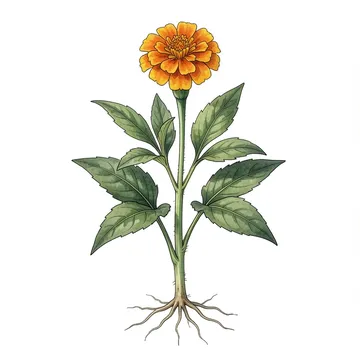
French marigold has the strongest record, but for specific uses. UF/IFAS found a thick planting left to grow at least two months, then turned under before the vegetable goes in, holds root-knot nematodes down. A few plants dotted between tomatoes won't do that. As an intercrop, it cut cabbage aphids, flea beetles and butterfly egg-laying in Polish cabbage trials, and slowed glasshouse whitefly on tomato in a Newcastle study. Marigolds can carry tomato spotted wilt virus (Clemson), so pull any plant that looks sick.
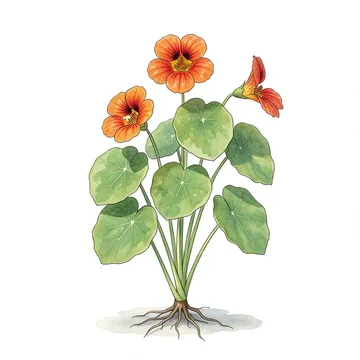
Nasturtium is a trap plant, not a repellent. Black bean aphids feed on it, and cabbage whites lay their eggs there. The RHS calls the evidence limited. A small Iowa trial found it reduced squash bugs on zucchini about as well as marigold. Check it often and remove heavily infested plants before the pests move on.
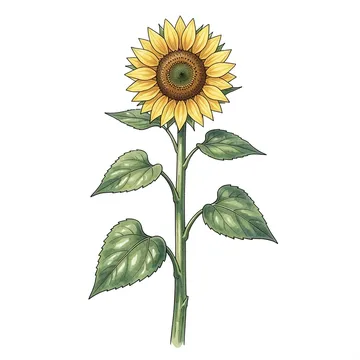
Sunflower builds up minute pirate bugs that move into peppers and eat thrips (Florida research). With sorghum, it also draws stink bugs, though one trial judged the reduction in peppers too small to be economic. Plant it on the north side of the bed so it doesn't shade crops, and keep it away from potatoes, which several extension charts rate as a poor match.
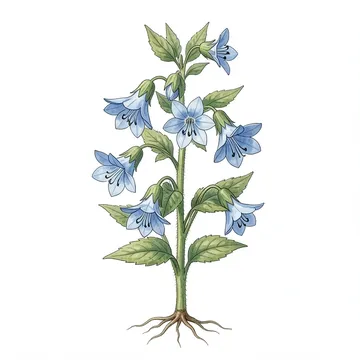
Borage is the pollinator plant. Strawberries beside borage gave about 35% more fruit in one UK garden trial, and a University of Minnesota strip at the end of strawberry rows drew mostly honey bees and bumble bees. It self-seeds freely, so pull the extras.
A pollinator strip for the vegetable garden
Pollinator garden plantings are popular in their own right, but a strip along the vegetable bed does double duty: it brings bees to crops that need them and feeds predatory insects at the same time.
Who needs it most: cucumbers, zucchini, winter squash, pumpkins and melons all rely on insect-pollinated flowers. Raspberries and blueberries do too.
What to sow:
- Borage at the end of squash or strawberry rows, about 12 inches (30 cm) apart.
- Single-flowered nasturtiums, which are nectar-rich, along the front edge.
- A few sunflowers on the north end.
- Herbs you let bloom: dill, cilantro, thyme, oregano, chives and lavender all draw bees or beneficial insects in our sources. Lavender wants a dry edge rather than rich vegetable soil.
Other proven flowers outside our 50-plant chart: sweet alyssum interplanted with lettuce reduced aphids by attracting predators (RHS), and African marigold with sweet alyssum increased aphid enemies around squash in a Florida study. Buckwheat, cowpea and sunn hemp beside sweet corn increased predators and parasitoids of corn earworm (University of Minnesota).
Keep expectations honest: an Oregon State project found insectary flowers raised hoverfly eggs in broccoli without suppressing cabbage aphids. More beneficial insects does not always mean fewer pests.
Where companion flowers go in the bed
Edges and ends work better than the middle. Marigolds and nasturtiums ring cucurbits and brassicas; borage sits at row ends; sunflowers stand on the north side. That keeps flowers from shading or crowding the crop, and it makes the trap plants easy to inspect.
Marigold and sunflower are daisy-family plants (Asteraceae), nasturtium and borage each have a family of their own, and none of them is related to a vegetable crop, so they don't complicate your crop rotation. For how each one fits against specific pests, see the pest control companions guide.
Free printable PDF
Get the complete companion planting chart
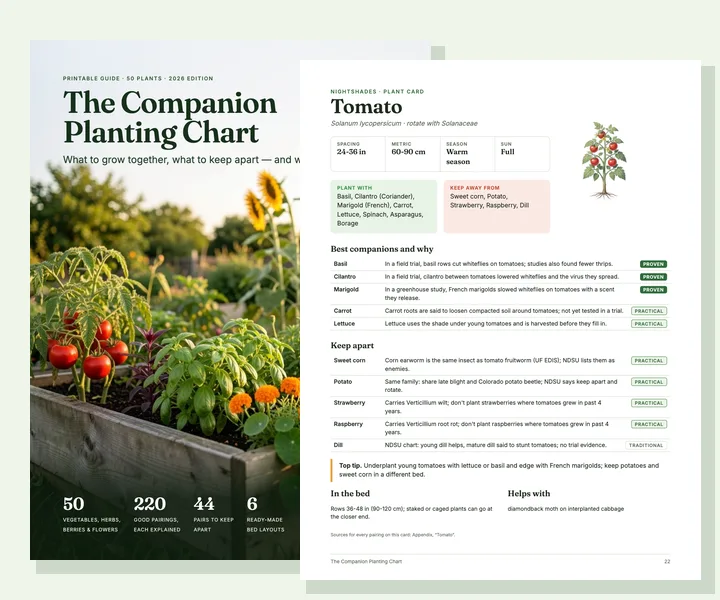
Print the pollinator bed plan from the kit, drawn to scale with plant counts, so you know how much borage, nasturtium and sunflower to sow along one bed.
- 1-page fridge chart + full 50 × 50 matrix
- 50 plant cards with spacing and reasons
- 6 bed plans drawn to scale
- US Letter and A4
Frequently asked questions
Is it good to plant marigolds in a vegetable garden?
Yes, if you use them for what the research supports. French marigolds reduced pests on cabbage in field trials and slowed whitefly in a glasshouse study. For root-knot nematodes, they only work as a dense block grown for two months or more before the vegetable. Studies found no effect on Colorado potato beetle.
What flowers attract pollinators to a vegetable garden?
Borage, sunflowers and single-flowered nasturtiums are the easiest. Herbs left to flower add more: dill, cilantro, thyme, oregano, chives and lavender all draw bees or beneficial insects. In one UK trial, borage near strawberries brought more fly pollinators and a bigger harvest.
Can nasturtiums and marigolds be planted together?
Yes, and around squash they complement each other. A small Iowa trial found both reduced squash bug and cucumber beetle damage on zucchini. Nasturtiums work as a trap for aphids and cabbage whites, so check them weekly, while marigolds work best as a separate dense pre-crop if nematodes are the problem.
What is the downside of planting sunflowers?
They shade anything to the north of them, so plant them on the north side. Sunflower residues inhibit germination of many species in lab studies, so remove stalks and roots at season end rather than tilling them in before sowing small seeds. Several charts also list sunflowers as poor potato neighbors.