Cabbage family
Kale Companion Plants: What to Grow With Kale and How to Keep Bugs Off
By the editorial team · Updated 2026-11-19 · Every pairing linked to its source
Quick answer. The best kale companion plants are trap crops: arugula sown one to two weeks early for flea beetles, plus radish and nasturtium, which pull flea beetles, aphids or root maggots away from brassicas. Beets, dill, onions, thyme and mint are traditional partners. Keep strawberries away from kale.
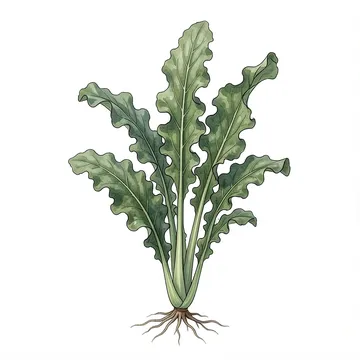
- Spacing
- 8-12 in · 20-30 cm
- Season
- Cool season
- Sun
- Full
- Rotate with
- Brassicaceae
Kale is a cool-season, full-sun brassica that's closer-spaced than its relatives: 8–12 in (20–30 cm) between plants, in rows about 36 in (90 cm) apart. You harvest the outer leaves and let the plant keep growing, so a kale row stays in the ground for a long time.
That long season gives flea beetles, aphids and caterpillars plenty of chances. There is a catch for anyone looking for evidence: kale-specific companion trials are scarce, and most kale advice is borrowed from broccoli and cabbage research. This page separates what was tested on kale from what was extended to it.
Kale companion chart
Good companions
| Plant | Why | Evidence | |
|---|---|---|---|
| Arugula (rocket) | Sow arugula one to two weeks early as a trap crop that draws flea beetles off kale. | Proven | source |
| Nasturtium | Nasturtium acts as a trap crop, drawing aphids and flea beetles away from kale. | Practical | source |
| Radish | Radish is used as a trap crop to draw flea beetles and root maggots off kale. | Practical | source |
| Beet | Beets are a traditional cabbage-family companion; no trial yet. | Traditional | source |
| Dill | A traditional pairing; dill flowers host insects that eat aphids. | Traditional | source |
| Onion | A traditional pairing; onion trials were on broccoli and cabbage, not kale. | Traditional | source |
| Thyme | Thyme is traditionally said to help kale; no trial yet. | Traditional | source |
| Mint | Mint is traditionally said to help kale; untested, so keep mint in a pot. | Traditional | source |
Keep apart
| Plant | Why | Evidence | |
|---|---|---|---|
| Strawberry | Gardening tradition says strawberries and kale don't mix; the reason is untested. | Traditional | source |
Proven Backed by a field trial or published study. Practical Recommended by a university extension or the RHS, with a clear reason. Traditional Gardener lore; no trial found yet.
What to Plant With Kale
Trap crops
- Arugula — Proven. Sow an arugula strip one to two weeks before setting out kale. Flea beetles go to the arugula first and leave the young kale alone for longer.
- Nasturtium — Practical. Utah State and Washington State describe nasturtium as an aphid and flea beetle trap crop for brassicas.
- Radish — Practical. Utah State lists radish as a trap crop for flea beetles and root maggots; no trial is cited.
Beneficial insects
- Dill — Traditional. The UF chart lists dill with the cabbage family. UMass notes dill flowers host aphid predators, which matters for a crop you harvest leaf by leaf over many weeks.
Traditional pairings
- Beet — listed with the cabbage family on the UC Davis chart.
- Onion — the UC Davis chart lists the onion family with brassicas. The caterpillar research behind onions was done on broccoli and cabbage, not kale.
- Thyme and mint — both appear on an Oregon State sheet as enhancing cole crops. Give mint its own container.
What Kale Should Not Be Planted With
- Strawberry — Traditional. UC Davis and UF list strawberry as incompatible with the whole cabbage family, kale included.
That's the only named foe in our sources. The less obvious rule is rotation: cabbage, broccoli, cauliflower, Brussels sprouts, radish and arugula are all brassicas. They make fine neighbors in one season, but kale shouldn't follow any of them in the same bed. See the crop rotation guide.
How to Keep Bugs Off Kale
Kale's pests arrive in waves, and the companions line up with them:
- Flea beetles on young plants. Sow the arugula trap strip early and add radish at the bed edge.
- Aphids in summer. Nasturtiums act as an aphid trap, and dill flowers bring in aphid predators.
- Caterpillars. For broccoli and cabbage, onions, thyme and nasturtiums reduced cabbageworm and looper damage in an Iowa study. Kale wasn't tested, but it's a close relative and those plants are easy to add.
Harvesting the outer leaves regularly also lets you see what's on the plant before a problem builds.
Making Room for Companions in a Kale Bed
At 8–12 in (20–30 cm) apart, kale leaves little open soil once it's grown. Put trap crops on the outside: arugula and radish along one edge, nasturtiums along another. Onions and thyme can go in the row between kale plants while the kale is young. If you keep cutting the lower leaves, light still reaches these low neighbors later in the season.
Free printable PDF
Get the complete companion planting chart
The PDF's rotation sheet tracks kale with all its brassica relatives, so you can see which bed is safe for it next year.
- 1-page fridge chart + full 50 × 50 matrix
- 50 plant cards with spacing and reasons
- 6 bed plans drawn to scale
- US Letter and A4
Kale, Beets and Onions in One Bed
Kale shares its chart partners with the rest of the cabbage family, and two of them make a simple, productive bed. Beets are listed with the cabbage family on the UC Davis chart, and the onion family appears there too. Plant kale down the center, onions between the kale plants while they're young, and beets along the edges. Add a potted mint at one corner if you want it. All three crops are cool-season, so they share the same planting window in spring or late summer.
Does It Really Work?
Only arugula has kale-relevant research here, as a flea beetle trap for brassicas. Nasturtium and radish traps are extension advice. The rest is chart tradition or results borrowed from broccoli and cabbage. That's still reasonable—kale is the same species as cabbage—but treat the gains as likely, not guaranteed.
Frequently asked questions
What can kale not be planted with?
UC Davis and UF charts list strawberries as incompatible with the cabbage family, which includes kale. No other foes appear in our sources. Also avoid planting kale where cabbage, broccoli, cauliflower, radish or other brassicas grew last season, because they share pests and diseases and should be rotated together.
How to keep bugs off kale?
Sow arugula one to two weeks before planting kale as a flea beetle trap crop, and add nasturtiums and radishes, which Utah State lists as trap crops for brassica pests. Dill flowers attract aphid predators. Onions, thyme and nasturtium reduced caterpillar damage on broccoli and cabbage in an Iowa study, and may help kale too.
What is the best companion plant for kale?
Arugula, used as a trap crop, has the strongest support. Sown a week or two before your kale, it draws flea beetles away from the young plants. Nasturtium and radish do a similar job, and dill brings in insects that eat aphids. Beets and onions are traditional partners.
Can kale and cabbage be planted together?
Yes. They are the same species and share companions and pests, so they can grow side by side in one season. The downside is that pests move easily between them. Rotate them together as one family and avoid putting either back in the same bed the following year.