Herbs
Thyme Companion Planting
By the editorial team · Updated 2026-11-19 · Every pairing linked to its source
Quick answer. Thyme companion planting works best with cabbage-family crops. In an Iowa study thyme reduced cabbage looper and cabbageworm damage on broccoli, and a greenhouse study saw less diamondback moth egg-laying on Brussels sprouts. Cabbage, kale and sweet potato are traditional partners. No chart lists a foe; just keep thyme out of wet soil.
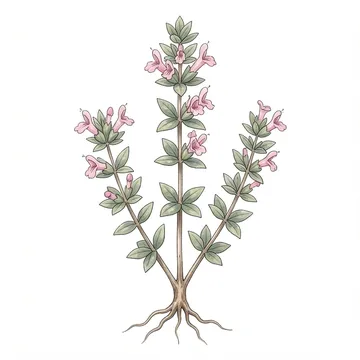
- Spacing
- 8-12 in · 20-30 cm
- Season
- Perennial
- Sun
- Full
- Rotate with
- Lamiaceae
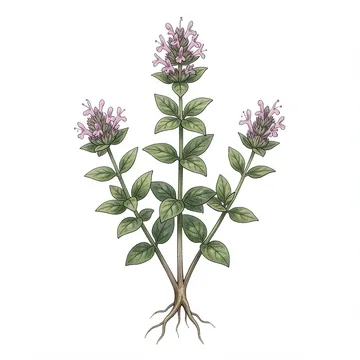
Thyme companion planting is mostly about edges. Thyme is a low perennial that needs sharp drainage, so it sits best along the border of a bed rather than in its wet, rich middle. From there it can do two jobs: flower for bees and sit beside the crops it may help.
Those crops are mainly the brassicas. Thyme is one of the few herbs with study results for cabbage-family pests, though the evidence is limited to an Iowa field study on broccoli and a greenhouse study on Brussels sprouts. Other pairings, including its use as a ground cover under berry bushes, are gardening tradition.
Thyme companion chart
Good companions
| Plant | Why | Evidence | |
|---|---|---|---|
| Broccoli | In a field study, broccoli grown with thyme had less looper and cabbageworm damage. | Proven | source |
| Brussels sprouts | In a greenhouse study, Brussels sprouts near thyme got fewer diamondback moth eggs. | Proven | source |
| Cabbage | Thyme is said to deter cabbageworm on cabbage; not trial-tested. | Traditional | source |
| Kale | Kale is traditionally said to do better near thyme; untested. | Traditional | source |
| Sweet potato | Thyme handles the heat at sweet potato bed edges; any pest-repelling effect is untested. | Traditional | source |
| Blueberry | Creeping thyme makes a low ground cover around blueberry bushes, shading soil and limiting weeds. | Traditional | source |
| Raspberry | Low aromatic thyme along the row edge is said to mask raspberries from pests; no trial. | Traditional | source |
Keep apart
No well-documented conflicts. See the notes below for general cautions.
Proven Backed by a field trial or published study. Practical Recommended by a university extension or the RHS, with a clear reason. Traditional Gardener lore; no trial found yet.
What to Plant With Thyme
Brassicas with study results
- Broccoli — Proven. An Iowa study found thyme reduced cabbage looper and imported cabbageworm damage in broccoli. Oregon State also lists thyme as enhancing cole crops.
- Brussels sprouts — Proven. In a greenhouse study, thyme reduced diamondback moth egg-laying on Brussels sprouts.
Other brassicas
- Cabbage — Traditional. The UF herb chart lists thyme against cabbage worm; the claim has not been trial-tested.
- Kale — Traditional. Listed with cole crops by Oregon State.
Beyond the vegetable bed
- Sweet potato — Traditional. Heat-tolerant thyme is suggested at bed edges; the pest claim is untested.
- Blueberry — Traditional. Creeping thyme makes a low ground cover around the bushes, shading soil and limiting weeds.
- Raspberry — Traditional. A low aromatic edge along the row.
What Not to Plant With Thyme
No chart we used lists a plant to keep away from thyme. The limits come from thyme's own needs:
- Wet ground. Thyme needs sharp drainage. Next to crops that are watered heavily, it is likely to struggle.
- Crowding. It is a low plant; tall, leafy crops planted right over it will shade it out.
Some sources go further. Arizona Extension slides pair thyme with eggplant, and a secondary report credits thyme with protecting zucchini from squash pests. We could not verify either at the original source, so we do not list them as companions.
Thyme Companion Planting Around a Brassica Bed
The top tip from our sources: edge brassica beds with thyme and let it flower. Bees and other pollinators will visit, even though thyme's pest-repelling reputation is mostly unproven outside the two studies above.
| Plant | Spacing | Position |
|---|---|---|
| Thyme | 10–12 in (Texas A&M) or 20–30 cm (RHS) | Along the bed edge |
| Broccoli | 18–24 in (45–60 cm) | Inner rows |
| Cabbage | 12–18 in (30–45 cm) | Inner rows |
| Kale | 8–12 in (20–30 cm) | Inner rows |
Because thyme is perennial, an edging planted once can frame the bed for several seasons while the brassicas inside rotate out. Just remember to move the brassicas each year and leave the thyme where it is.
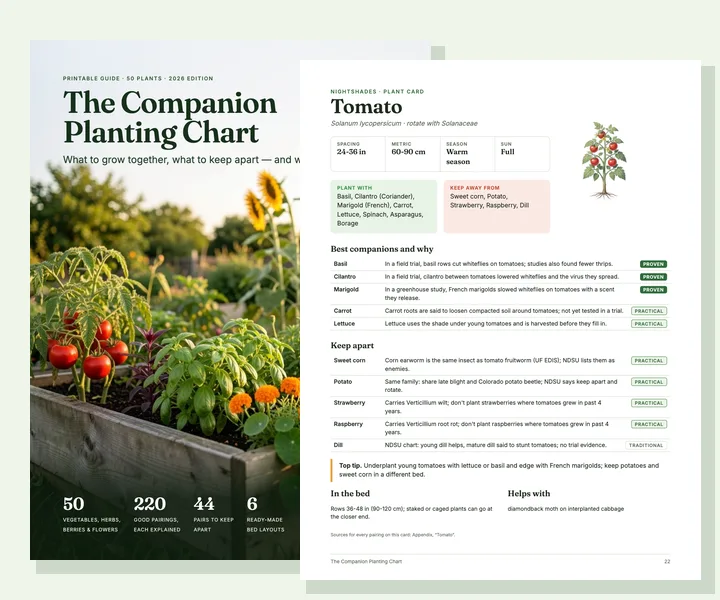
Free printable PDF
Get the complete companion planting chart
The PDF's brassica bed plan shows a thyme edging drawn to scale around broccoli, cabbage and kale, so you can print it and plant the border once.
- 1-page fridge chart + full 50 × 50 matrix
- 50 plant cards with spacing and reasons
- 6 bed plans drawn to scale
- US Letter and A4
Thyme as a Living Ground Cover
Under blueberries, creeping thyme does a different job. It forms a low mat that shades the soil and keeps weeds down without competing for the bushes' light. Blueberries need acid soil, so check that the thyme copes in your pH before you plant a large area. Along a raspberry row, thyme works as an aromatic edging strip that stays out from under the canes.
Whatever the setting, give thyme 10–12 in (25–30 cm) per plant so the mat can knit together. Because it is perennial, the planting does not need redoing each spring, which is the main reason an edging of thyme is low effort.
Does It Really Work?
Thyme has more evidence than most herbs, but it is narrow: one field study on broccoli caterpillars and one greenhouse study on Brussels sprouts. Claims that it repels whitefly or cabbage worm generally are chart lore. A thyme edging is cheap, perennial and good for bees, so it is worth planting around brassicas even if the pest effect is modest. The pest control companions guide compares it with other herbs.
Frequently asked questions
Are mint and thyme companion plants?
Our sources do not list mint and thyme as companions or as foes. They do have opposite needs: thyme wants sharp drainage and dry soil, while mint likes moist soil and spreads by runners. If you grow both, keep the mint in a pot so it cannot invade the thyme.
What should not be planted near thyme?
No extension chart we checked names a foe for thyme. The practical rule is to keep it away from heavily watered crops, because thyme needs sharp drainage, and away from tall leafy plants that would shade it. Plant it along a bed edge instead of in the middle.
Does thyme need full sun?
Yes. Thyme is a full-sun plant that also needs very well-drained soil. That makes the sunny edge of a bed the best place for it. Inside a shady, crowded bed it tends to struggle, even beside crops it is said to help.
What vegetables grow well with thyme?
Cabbage-family crops are the best match. An Iowa study found thyme reduced caterpillar damage on broccoli, and a greenhouse study saw fewer diamondback moth eggs on Brussels sprouts. Cabbage, kale and sweet potato are traditional partners listed by extension charts.
Should thyme be watered every day?
No. Thyme needs sharp drainage and does best in soil that dries between waterings. Daily watering suits leafy vegetables, not thyme. Plant it at the bed edge so you can water the crops inside at their roots without soaking the herb along the border.