Herbs
Dill Companion Plants
By the editorial team · Updated 2026-11-19 · Every pairing linked to its source
Quick answer. Dill's best companions are eggplant and cabbage, where trials found dill increased predators of their pests. Broccoli, kale, cucumber, lettuce, onion and melons are traditional partners. Keep dill away from carrots, its relatives, and from mature tomatoes, which one extension list says it stunts.
- Spacing
- 8-12 in · 20-30 cm
- Season
- Cool season
- Sun
- Full
- Rotate with
- Apiaceae
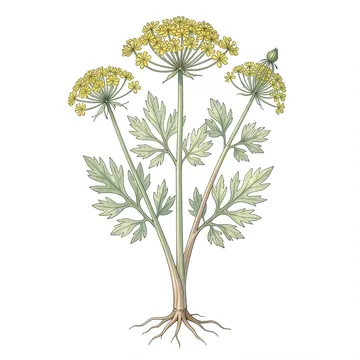
Dill companion plants make most sense once you see what dill does in flower. Its open, flat umbels feed ladybirds, lacewings, hoverflies, predatory wasps and bees, many of which eat or parasitize garden pests. Let dill bloom and it turns into a food station for the insects you want.
That is the logic behind the two pairings with trial support. In a New Jersey field trial, dill strips beside eggplant raised predation of Colorado potato beetle eggs. In New Zealand, cabbage grown with dill had fewer winged aphids. The rest of the list is chart lore, and dill has two neighbors to avoid.
Dill companion chart
Good companions
| Plant | Why | Evidence | |
|---|---|---|---|
| Eggplant | In a field trial, dill strips drew ladybugs and lacewings that ate potato beetle eggs on eggplant. | Proven | source |
| Cabbage | Flowering dill feeds predatory wasps and hoverflies around cabbage; a trial also found fewer aphids. | Proven | source |
| Broccoli | A traditional pairing; dill flowers attract predatory wasps to broccoli. | Traditional | source |
| Cucumber | Cucumber is a traditional dill companion; no trial yet. | Traditional | source |
| Lettuce | Dill is traditionally said to help lettuce; untested. | Traditional | source |
| Onion | Dill is traditionally said to help onions and garlic; no trial yet. | Traditional | source |
| Cantaloupe (melon) | A traditional pairing; dill flowers attract hoverflies and predatory wasps to melons. | Traditional | source |
| Kale | A traditional pairing; dill flowers host insects that eat aphids on kale. | Traditional | source |
Keep apart
| Plant | Why | Evidence | |
|---|---|---|---|
| Carrot | Dill is in the carrot family; tradition keeps it away from carrots. | Traditional | source |
| Tomato | Young dill may help, but mature dill is said to stunt tomatoes; untested. | Traditional | source |
Proven Backed by a field trial or published study. Practical Recommended by a university extension or the RHS, with a clear reason. Traditional Gardener lore; no trial found yet.
What to Plant With Dill
Pairings with trial data
- Eggplant — Proven. In a New Jersey field trial (Patt, Hamilton and Lashomb, 1997), strips of dill and coriander beside eggplant raised ladybird and lacewing predation of Colorado potato beetle eggs.
- Cabbage — Proven. Dill-intercropped cabbage had fewer winged cabbage aphids in a New Zealand field trial, and flowering dill feeds predatory wasps and hoverflies.
The cabbage family
- Broccoli and kale — Traditional. Oregon State and UF list dill with cole crops; UMass notes dill flowers host aphid predators.
Other chart partners
- Cucumber — Traditional. Listed by UF and Oregon State.
- Cantaloupe — Traditional. Its flowers attract hoverflies and predatory wasps near melons.
- Lettuce and onion — Traditional. Oregon State lists dill as enhancing both.
What Not to Plant With Dill
- Carrot — Traditional. Dill and carrot are both in the Apiaceae family. UF and UC Davis charts list them as incompatible, and the carrot page notes they can cross-pollinate, which matters if you save seed.
- Tomato — Traditional, with a twist. NDSU says young dill helps tomatoes but mature dill retards their growth; UF simply calls dill a bad tomato companion. Neither claim has trial evidence. The safe move is to keep flowering dill away from established tomato plants.
Dill also self-sows if seed drops, so a patch can spread into neighboring rows. Cut seed heads before they shatter if you want to keep it in place.
If you grow carrots and dill in the same garden, put them in separate beds and do not let dill flower beside a carrot crop you plan to save seed from. For tomatoes, a practical compromise follows NDSU's distinction: young dill early in the season is not the concern, so pull or cut back dill plants near the tomato bed before they mature and set seed.
Dill Companion Plants as an Insectary Strip
The trials that worked used dill as a strip beside the crop, not scattered among it. You can copy that layout:
- Sow a row of dill along one side of the eggplant or cabbage bed.
- Thin to 8–12 in (20–30 cm) apart; Texas A&M uses 12 in, the RHS about 20 cm.
- Let several plants bolt and flower, since the open umbels are what feed beneficial insects.
- Keep the strip away from carrots and from the tomato bed.
Dill grows 2–3 ft tall, so place the strip on the north side of shorter crops. Pairing it with cilantro, another Apiaceae herb used in the same New Jersey trial, gives a longer flowering window. The pest control companions guide lists other insectary plants.
A strip also makes harvest easier. You can cut leaves from the near end of the row for the kitchen while the far end flowers for the insects, and the two uses do not compete.
Free printable PDF
Get the complete companion planting chart
The PDF's pest-to-protector table lists dill beside each pest it helps with, so you can print one sheet and plan your insectary strips for the season.
- 1-page fridge chart + full 50 × 50 matrix
- 50 plant cards with spacing and reasons
- 6 bed plans drawn to scale
- US Letter and A4
Insects Dill Attracts
| Insect | What it does |
|---|---|
| Ladybird beetles | Eat aphids and beetle eggs |
| Lacewings | Larvae eat aphids and other soft pests |
| Hoverflies | Larvae eat aphids |
| Predatory wasps | Parasitize or hunt caterpillars and aphids |
| Bees and butterflies | Pollinate nearby crops |
The list comes from the extension and research sources behind this page. Oregon State also claims dill repels squash bugs, but there is no trial behind that.
Does It Really Work?
Dill has real evidence on its side, but the effect is about attracting predators, not repelling pests. The New Jersey and New Zealand trials both point the same way. The warnings about carrots and tomatoes are chart-based, and the tomato advice even contradicts itself between sources. Grow dill as a flowering strip and keep it away from those two crops.
Frequently asked questions
What can you not plant with dill?
Keep dill away from carrots, which share its plant family and can cross-pollinate with it, according to UF and UC Davis charts. Also avoid planting mature dill near tomatoes: NDSU says it retards their growth and UF lists it as a bad tomato companion, though neither claim has been tested.
What other herbs pair well with dill?
Cilantro is the clearest match. A New Jersey trial used strips of both dill and coriander beside eggplant, and together they increased predators of Colorado potato beetle eggs. Both belong to the same family, so grow them in one strip and keep them away from carrots.
Is dill a perennial?
Dill is grown as a cool-season crop rather than a perennial. It self-sows if its seed drops, so a patch can reappear in following seasons. Cut the seed heads before they shatter if you do not want new seedlings spreading into nearby rows.
What vegetables grow well with dill?
Eggplant and cabbage have trial support: dill increased predators of their pests. Broccoli, kale, cucumber, cantaloupe, lettuce and onion are traditional partners listed by Oregon State and University of Florida charts. Let some dill flower so it can feed the beneficial insects.
How far apart should dill be planted?
Thin dill to about 12 in (30 cm) apart, as Texas A&M recommends, or about 20 cm following the RHS. Plants grow 2–3 ft tall, so place a dill strip on the north side of shorter crops to avoid shading them.