Root crops
Carrot Companion Planting: What to Grow With Carrots
By the editorial team · Updated 2026-11-19 · Every pairing linked to its source
Quick answer. The best carrot companion plants are young onions, which cut carrot fly attack in trials while still leafy, and radishes, which mark slow carrot rows and come out early. Tomatoes can shade carrots in heat. Beans, lettuce and peas are traditional partners. Keep carrots away from dill and celery, which share their family.
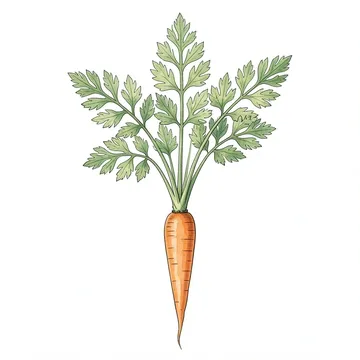
- Spacing
- 1-2 in · 2.5-5 cm
- Season
- Cool season
- Sun
- Full
- Rotate with
- Apiaceae
Carrots are a cool-season, full-sun root crop sown thinly and thinned to 1–2 in (2.5–5 cm), in rows about 18 in (45 cm) apart. The seed is tiny and slow to come up, so a carrot row spends its first weeks as a barely visible line of seedlings.
The pest that drives carrot companion planting is carrot fly, whose larvae tunnel into the roots. Carrots also have relatives in the garden—dill, celery and parsnip—that share pests and diseases with them, which is why the "what not to plant with carrots" list looks different from most.
Carrot companion chart
Good companions
| Plant | Why | Evidence | |
|---|---|---|---|
| Onion | In trials, young onions among carrots cut carrot fly; the effect faded once onions bulbed. | Proven | source |
| Radish | Sow carrots with radishes; the radishes come out early, leaving room for slow carrots. | Practical | source |
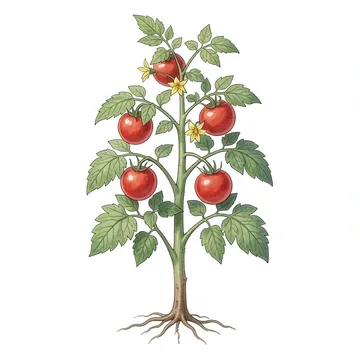
| Tomato | Tomato leaves shade heat-sensitive carrots; said to help, though not trial-tested. | Practical | source |
| Beans (bush & pole) | Beans are a traditional carrot companion; no trial yet. | Traditional | source |
| Brussels sprouts | Brussels sprouts are an old carrot companion; untested — try it and see. | Traditional | source |
| Chives | A traditional pairing; the idea that chives repel carrot fly is unproven. | Traditional | source |
| Lettuce | Lettuce is a classic carrot partner; no trial yet. | Traditional | source |
| Peas | Peas are a traditional carrot companion; no trial evidence. | Traditional | source |
| Rosemary | Rosemary is said to deter carrot fly; an old idea, unverified. | Traditional | source |
| Sage | Sage is said to keep carrot fly away; traditional, not yet tested. | Traditional | source |
Keep apart
| Plant | Why | Evidence | |
|---|---|---|---|
| Celery | Celery is in the carrot family and shares carrot fly and diseases. | Traditional | source |
| Dill | Dill is in the carrot family and can cross-pollinate with carrots grown for seed. | Traditional | source |
Proven Backed by a field trial or published study. Practical Recommended by a university extension or the RHS, with a clear reason. Traditional Gardener lore; no trial found yet.
What to Plant With Carrots
Against carrot fly
- Onion — Proven. Young intercropped onions cut carrot fly attack in trials. The effect vanished once the onions began bulbing, so the protection covers the early season only.
Row helpers
- Radish — Practical. Sow radish seed with carrot seed. Radishes come up fast, mark the row and are pulled early, leaving room for the slow carrots.
- Tomato — Practical. Oregon State says tomato foliage shades heat-sensitive carrots. No trial is cited, but carrots planted on the shady side of a tomato row is an easy arrangement.
Traditional pairings
- Beans — listed by UF and NDSU.
- Lettuce and peas — listed by UC Davis and UF; both are cool-season crops sown at about the same time.
- Brussels sprouts — listed by the UF/IFAS chart.
- Chives — paired with carrots in the UF herb chart and Oregon State herb list; the carrot fly claim is unproven.
- Rosemary and sage — listed by UF and UC as carrot fly deterrents. Unverified.
What Not to Plant With Carrots
- Dill — Traditional. UC Davis and UF list dill as incompatible. Dill and carrot are in the same family and can cross-pollinate, which matters if you save carrot seed.
- Celery — Traditional. UF lists celery as bad for carrots. As a relative, it shares carrot fly and diseases, so the pest has two hosts in one bed.
Outside our 50, UF also lists parsnip as a bad companion (Traditional); it's another member of the same family.
The common thread: don't crowd carrots with their own relatives. Parsley is in this family too, so rotate all of them together.
Carrots and Onions: Making the Classic Pairing Work
The onion–carrot combination is famous, and research backs it with conditions. In the Uvah and Coaker trial (1984), onions protected carrots strongly only while the onions were young. Once they began to bulb, the protection faded. The same trial tested French marigold as an intercrop, and it was ineffective against carrot fly.
Practical steps:
- Sow carrots and onions together, in alternating rows.
- Plant generously, so the onions are still leafy through the carrots' first weeks.
- Don't swap the onions for marigolds expecting the same result.
Sowing Carrots With Radishes
Mixing a little radish seed into the carrot row solves two problems at once. Radishes germinate quickly, so you can see where the row is before the carrots appear, and their seedlings break any crust on the soil surface. Harvest the radishes as soon as they size up, which also thins the carrot row. Then thin the carrots to their final 1–2 in (2.5–5 cm).
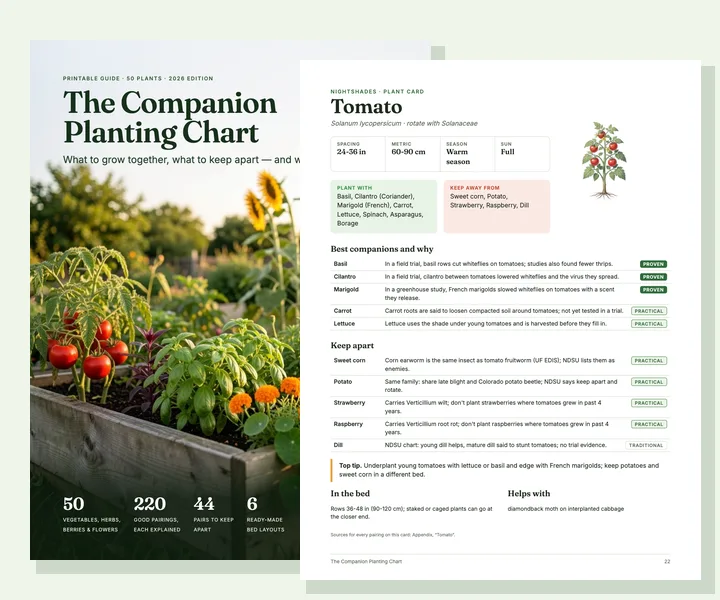
Free printable PDF
Get the complete companion planting chart
Download the kit for the carrot card and the spacing sheet, so the carrot, radish and onion rows go in right the first time.
- 1-page fridge chart + full 50 × 50 matrix
- 50 plant cards with spacing and reasons
- 6 bed plans drawn to scale
- US Letter and A4
Carrots Beside Tomatoes
Oregon State lists two links between these crops. From the carrot side, tomato foliage shades heat-sensitive carrots; from the tomato side, carrot roots loosen compacted soil around the tomatoes. Neither claim has a trial behind it. If you try the pairing, sow carrots on the shaded side of the tomato row, and keep them clear of the tomato's 24–36 in (60–90 cm) spacing so neither crowds the other.
Does It Really Work?
Onions against carrot fly is a real result with a time limit. Radish as a row marker is a practical technique rather than a pest claim. Most herb pairings claimed to repel carrot fly—rosemary, sage, chives—are untested, and marigolds failed when tried. The foe list rests on family relationships, which is a sound reason even without a trial.
Frequently asked questions
What is a good plant to plant next to carrots?
Young onions are the best-supported neighbor: in trials they cut carrot fly attack while still leafy, before bulbing. Radishes are useful too, because they mark slow carrot rows and are harvested early. Oregon State suggests tomatoes for shade in hot weather, and beans, lettuce and peas are traditional partners.
What not to mix carrots with?
Avoid planting carrots with their relatives. UC Davis and UF list dill as incompatible, partly because the two can cross-pollinate, and UF lists celery and parsnip as bad neighbors. These plants share carrot fly and diseases with carrots, so growing them together gives pests more to feed on.
What vegetable pairs well with carrots?
Onions pair best, since young onion rows reduced carrot fly in field trials. Radishes sown in the same row help mark it and break the soil crust. Lettuce, peas and beans are cool- or warm-season partners listed in UC Davis, UF and NDSU charts, and tomatoes can shade carrots in hot weather.
Do marigolds protect carrots from carrot fly?
Not according to the research. In the Uvah and Coaker trial, a French marigold intercrop was ineffective against carrot fly, while young onions reduced it. If carrot fly is your problem, intercrop with onions early in the season and rotate carrots away from dill, celery and parsnip.