Herbs
Sage Companion Plants
By the editorial team · Updated 2026-11-19 · Every pairing linked to its source
Quick answer. Sage companion plants include cabbage-family crops, carrots, beans and peas, plus rosemary as a herb neighbor. A greenhouse study found sage reduced diamondback moth egg-laying on Brussels sprouts. Keep sage away from cucumbers, which NDSU calls it generally injurious to, and from onions, listed as a bad pair by UF.
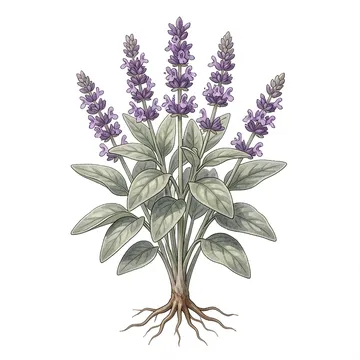
- Spacing
- 24-30 in · 60-75 cm
- Season
- Perennial
- Sun
- Full
- Rotate with
- Lamiaceae
Sage companion plants follow a pattern you will see with other woody Mediterranean herbs: partners that tolerate dry, well-drained soil at the edge of a bed, and a short list of crops to keep apart. Sage is a perennial that reaches 30–90 cm across, so it needs real room.
The one study result involves Brussels sprouts, where sage reduced diamondback moth egg-laying in a greenhouse. Everything else is from extension charts, including a warning about cucumbers that appears in more than one source but has no explanation behind it.
Sage companion chart
Good companions
| Plant | Why | Evidence | |
|---|---|---|---|
| Brussels sprouts | In a greenhouse study, Brussels sprouts near sage got fewer diamondback moth eggs. | Proven | source |
| Cabbage | Cabbage is the classic target for sage, said to deter cabbage moths; untested. | Traditional | source |
| Rosemary | Sage and rosemary share the same dry, sunny conditions. | Practical | source |
| Broccoli | Sage is traditionally said to help broccoli; no trial yet. | Traditional | source |
| Carrot | A traditional pairing; sage is said to deter carrot fly, but that's unproven. | Traditional | source |
| Beans (bush & pole) | Beans are traditionally said to do better near sage; no trial yet. | Traditional | source |
| Peas | Sage is traditionally said to help peas; untested — try it and see. | Traditional | source |
Keep apart
| Plant | Why | Evidence | |
|---|---|---|---|
| Cucumber | Sage is traditionally called harmful to cucumbers; no trial yet, so keep them apart. | Traditional | source |
| Onion | Onions are traditionally kept away from sage; no reason has been documented. | Traditional | source |
Proven Backed by a field trial or published study. Practical Recommended by a university extension or the RHS, with a clear reason. Traditional Gardener lore; no trial found yet.
What to Plant With Sage
The cabbage family
- Brussels sprouts — Proven. Sage reduced diamondback moth egg-laying on Brussels sprouts in a greenhouse study.
- Cabbage — Practical. The UF herb chart and NDSU list sage to deter cabbage moth; the claim is untested.
- Broccoli — Traditional. Oregon State lists sage as enhancing cole crops.
Roots and legumes
- Carrot — Traditional. The UC chart lists sage with carrots, and the UF herb chart says it deters carrot fly.
- Beans and peas — Traditional. Oregon State lists sage as enhancing both.
Herb neighbor
- Rosemary — Practical. Paired in the UF herb chart; the two share a liking for sun and sharp drainage.
What Not to Plant With Sage
- Cucumber — Traditional. The UF herb chart lists cucumber as a bad companion, and NDSU describes sage as generally injurious to cucumber. Neither source explains why, and no trial has tested it. Still, two independent listings make it an easy rule to follow.
- Onion — Traditional. The UF chart lists sage among bad companions for onions, again with no mechanism given.
There is also a practical clash with cucumbers: they want rich, moist soil, while sage wants it well drained. Putting them side by side means one is watered wrongly.
Sage Companion Planting Chart
| Plant | With sage? | Note | Label |
|---|---|---|---|
| Brussels sprouts | Yes | Fewer moth eggs (greenhouse) | Proven |
| Cabbage | Yes | Cabbage moth claim | Practical |
| Rosemary | Yes | Same dry, sunny needs | Practical |
| Broccoli | Yes | Chart listing | Traditional |
| Carrot | Yes | Carrot fly claim | Traditional |
| Beans / Peas | Yes | Chart listing | Traditional |
| Cucumber | No | Called injurious by NDSU | Traditional |
| Onion | No | UF chart listing | Traditional |
Placing Sage Beside Vegetables
Sage is big for a herb. Texas A&M spaces plants 30 in apart, and the RHS says they reach 30–90 cm across. That size, plus its need for drainage, makes the end of a bed the right spot.
- Plant sage at the sunny end of a brassica or carrot bed.
- Keep cucumbers and onions in a different bed.
- Group it with rosemary if you have a dry corner; both prefer the same soil.
Sage flowers in summer and attracts bees and other pollinators, so a plant at the bed end also serves as a pollinator stop. Since it is a perennial, it stays while the vegetables rotate.
Free printable PDF
Get the complete companion planting chart
The PDF's never-together sheet lists sage with cucumbers and onions alongside every other clash, so you can print one page and check it before planting.
- 1-page fridge chart + full 50 × 50 matrix
- 50 plant cards with spacing and reasons
- 6 bed plans drawn to scale
- US Letter and A4
Sage in a Brassica Rotation
Because sage is perennial and brassicas move each year, the herb and the crop will not always be side by side. Two ways to handle that:
- A sage plant at each bed end. If you rotate crops through several beds, a sage at the end of each means the brassicas always have one nearby, whichever bed they land in.
- Sage in a pot. A container can move with the cabbage family each season and keeps sage's drainage under your control.
Either way, check that the bed sage is guarding does not hold cucumbers or onions that year. The PDF's rotation sheet makes that easy to see at a glance.
Does It Really Work?
Sage's one solid result is the greenhouse finding on Brussels sprouts. The cabbage moth, carrot fly and flea beetle claims are extension listings without trials, and so is the cucumber warning. Plant sage at a bed end beside brassicas or carrots, keep it away from cucumbers and onions, and let its flowers feed the bees.
Frequently asked questions
What should you not plant near sage?
Keep sage away from cucumbers and onions. The UF herb chart lists cucumber as a bad companion and NDSU calls sage generally injurious to it; the UF chart also lists onions as a poor match. Neither source gives a reason, but cucumbers also want moister soil than sage.
Does sage come back every year?
Yes, sage is a perennial. Plants reach 30–90 cm across, according to the RHS, so give each one a permanent spot with good drainage, such as the end of a vegetable bed or a dry corner shared with rosemary.
What vegetables grow well with sage?
Cabbage-family crops are the best match; a greenhouse study found sage reduced diamondback moth egg-laying on Brussels sprouts. Cabbage, broccoli, carrots, beans and peas are traditional partners listed by UF, NDSU, UC and Oregon State charts. Plant sage at the bed end, not among them.
How far apart should sage be planted?
Texas A&M recommends 30 in between sage plants, and the RHS notes they reach 30–90 cm across. Leave that space around sage when it sits beside vegetables, so it does not crowd smaller crops and the soil around it can drain.
Can sage and rosemary be planted together?
Yes. They appear together in the UF herb chart, and each wants sun with fast-draining ground. A shared corner at the sunny end of a bed suits them well. Give rosemary about 24 in (60 cm) and sage about 30 in so neither crowds the other.