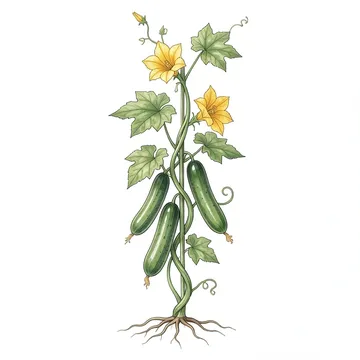
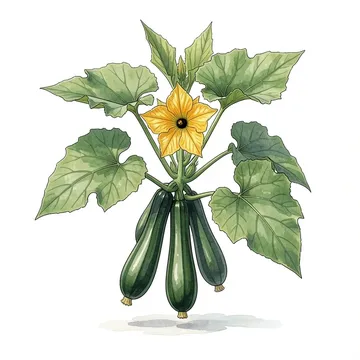
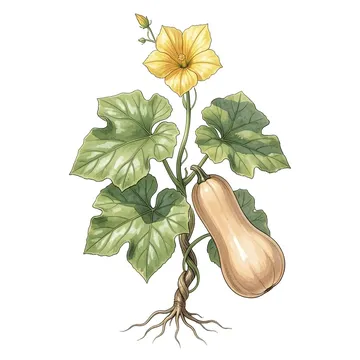
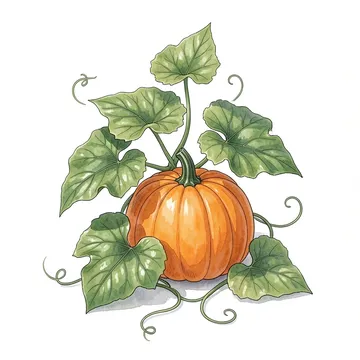
Squash family
Cantaloupe Companion Plants: What to Grow With Melons
By the editorial team · Updated 2026-11-19 · Every pairing linked to its source
Quick answer. Good cantaloupe companion plants are dill and borage, which bring pollinators and beneficial insects such as hoverflies to the melon patch. Corn, nasturtium, radish and sunflower are listed as melon companions in university charts. Don't plant cantaloupe near potatoes, and rotate it away from other squash-family crops.
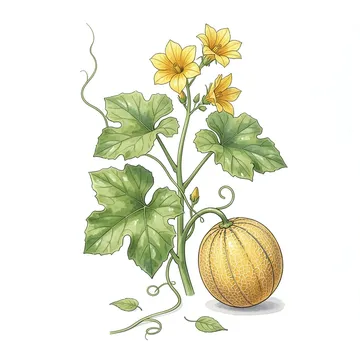
- Spacing
- 18-24 in · 45-60 cm
- Season
- Warm season
- Sun
- Full
- Rotate with
- Cucurbitaceae
Cantaloupe, the familiar netted muskmelon, is a warm-season, full-sun cucurbit. Plants go 18–24 in (45–60 cm) apart in rows 48–72 in (120–180 cm) wide, which makes it more compact than watermelon or pumpkin, but the vines still run.
Melons need insects to carry pollen between flowers, and aphids are a common nuisance on the leaves. The cantaloupe companions with the most sense behind them work on those two things: they draw in bees and the predatory insects that eat aphids.
Cantaloupe companion chart
Good companions
| Plant | Why | Evidence | |
|---|---|---|---|
| Borage | Borage is a traditional melon partner; its flowers bring bees to pollinate cantaloupe. | Traditional | source |
| Sweet corn | Corn is a traditional melon companion; no trial evidence yet. | Traditional | source |
| Dill | A traditional pairing; dill flowers attract hoverflies and predatory wasps. | Traditional | source |
| Nasturtium | Nasturtium is an old melon companion; the squash bug research behind it was on squash. | Traditional | source |
| Radish | Radish is an old melon companion; no trial yet. | Traditional | source |
| Sunflower | Sunflowers are a traditional cantaloupe companion; untested, so watch your bed. | Traditional | source |
Keep apart
| Plant | Why | Evidence | |
|---|---|---|---|
| Potato | Potatoes are traditionally kept away from melons; no reason has been documented. | Traditional | source |
Proven Backed by a field trial or published study. Practical Recommended by a university extension or the RHS, with a clear reason. Traditional Gardener lore; no trial found yet.
What to Plant With Cantaloupe
All cantaloupe pairings in our sources are Traditional: listed in a chart, with no cantaloupe trial behind them. Some have a clear mechanism, though.
Beneficial insects and pollinators
- Dill — Oregon State's herb list pairs dill with melons. Dill flowers attract hoverflies and predatory wasps, which hunt aphids.
- Borage — Oregon State singles out borage for melons; its flowers bring bees for pollination.
Chart companions
- Corn — listed with melons by UF.
- Nasturtium — listed with melons by UF. Its squash bug research was done on squash, so any melon benefit is unconfirmed.
- Radish — listed with melons by UF; a quick spring crop that's out before the vines need the room.
- Sunflower — West Virginia University's chart lists sunflower as a cantaloupe companion. Plant it where its shade falls away from the melons.
What Not to Plant With Cantaloupe
- Potato — Traditional. UF lists potato as a bad companion for melons. No mechanism is given.
Cantaloupe's closest relatives—cucumber, watermelon, zucchini, pumpkin and winter squash—aren't listed as foes, but they share pests with it. For crop rotation they are one family, so a bed that held any of them last season isn't the place for cantaloupe this year.
That makes cantaloupe one of the easier crops to place. Apart from keeping it out of the potato bed and off last year's cucurbit ground, there's little the charts tell you to avoid, so the choice of neighbors comes down to sun, space and the insects you want to attract.
Dill and Borage: Setting Up a Melon Patch for Insects
Our notes on cantaloupe sum it up: borage and dill mainly help by bringing pollinators and beneficial insects. To get that effect, both need to flower while the melons do.
- Sow dill in a block at one end of the patch, so its flower heads open by midsummer.
- Set borage at the corners, where it won't be covered by vines.
- Leave a strip of open ground between the herbs and the melon row so the vines can run without smothering them.
Dill can grow tall and floppy. Keep it on the side of the bed where it won't shade the melons in the afternoon.
Where's the Best Place to Plant Cantaloupe?
Pick the sunniest bed you have, with no squash-family crop grown there last year. Full sun is a must. Leave the 48–72 in (120–180 cm) row width so the vines can spread, and put any taller companions—corn or sunflower—on the north side. If the bed held potatoes, it's fine to follow them with melons, but don't grow the two side by side.
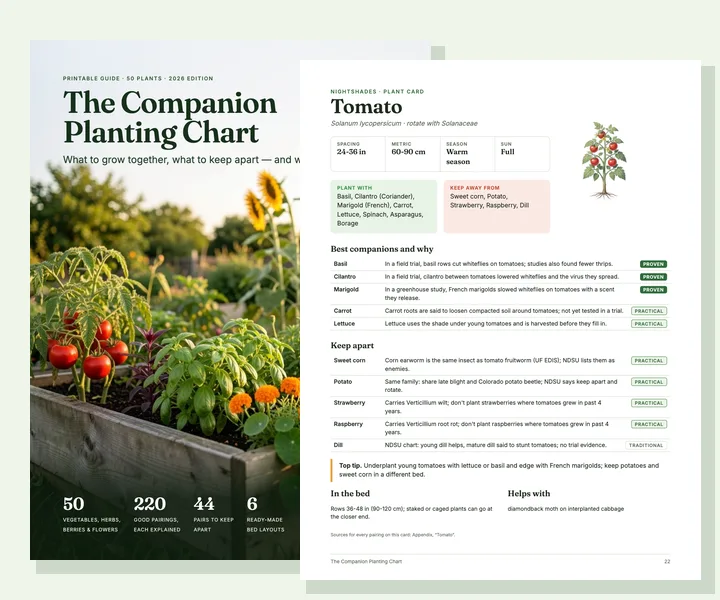
Free printable PDF
Get the complete companion planting chart
Download the PDF and add the cantaloupe card to your garden binder, with its spacing, rotation family and bee-friendly companions on one page.
- 1-page fridge chart + full 50 × 50 matrix
- 50 plant cards with spacing and reasons
- 6 bed plans drawn to scale
- US Letter and A4
Cantaloupe vs Watermelon: Same Friends, Different Footprint
Cantaloupe and watermelon share most of their companion list—borage, corn, nasturtium and radish—and the same foe, potato. Cantaloupe adds two that watermelon doesn't get in our sources: dill from Oregon State's herb list and sunflower from West Virginia University's chart.
The big difference is space. Cantaloupe plants go 18–24 in (45–60 cm) apart, while watermelon needs 48–60 in (120–150 cm). That makes cantaloupe the easier melon to fit into a mixed bed, with dill and borage close by. If you grow both, put them in the same cucurbit bed and rotate them together.
Does It Really Work?
There are no cantaloupe-specific trials in our sources, so every pairing here is traditional. Dill and borage have the most believable reason, because they feed and house the insects melons depend on. Treat the other chart companions as optional, and put your effort into sun, space and rotation.
If your melons flower well but set little fruit, more bee flowers nearby are the companion change most likely to help.
Frequently asked questions
What is the best companion plant for cantaloupe?
Dill and borage are the best companions for cantaloupe. Oregon State's herb list pairs both with melons: dill flowers attract hoverflies and predatory wasps that eat aphids, and borage brings bees for pollination. Corn, nasturtium, radish and sunflower are also listed in university charts as melon companions.
What should you not plant with cantaloupe?
The UF chart lists potatoes as a bad companion for melons, including cantaloupe. Also avoid planting cantaloupe where cucumbers, squash, pumpkins or watermelons grew last season, because these cucurbits share pests and should be rotated as a group. No other foes are listed in our sources.
Where's the best place to plant cantaloupe?
Choose a full-sun bed where no squash-family crop grew last year. Space plants 18–24 in (45–60 cm) apart in rows 48–72 in (120–180 cm) wide. Put tall companions like corn or sunflower on the north side, and keep dill and borage at the edges so they flower without being covered by vines.
What are some good companion plants for melons?
For melons in general, our sources list borage, corn, nasturtium and radish, with dill and sunflower added for cantaloupe. Borage and dill are the most useful because they draw bees and aphid predators. None has been tested on melons in a trial, so they are traditional pairings.