Corn & okra
Corn Companion Plants: What to Grow With Sweet Corn
By the editorial team · Updated 2026-11-19 · Every pairing linked to its source
Quick answer. The best corn companion plants are pole beans and pumpkin or winter squash, the Three Sisters; Cornell trials found the trio produced more food per area than each crop alone. Cucumbers can climb the stalks and lettuce or radish fit in the shade. Keep tomatoes away: corn earworm also attacks tomatoes.
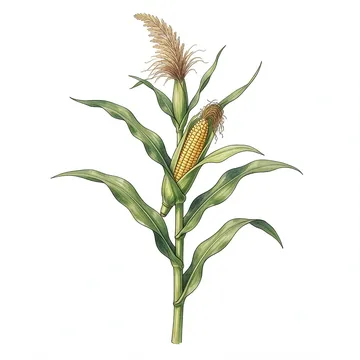
- Spacing
- 8-12 in · 20-30 cm
- Season
- Warm season
- Sun
- Full
- Rotate with
- Poaceae
Corn companion plants are some of the best studied in the whole garden. The Three Sisters, sweet corn with climbing beans and sprawling squash, is an Indigenous planting system, and modern trials at Cornell found it yielded more food energy and protein per area than growing each crop on its own.
Corn also makes a useful frame for smaller crops. Its tall stalks act as living poles, and the strip of shade at their base gives heat-sensitive greens a break in midsummer. The one neighbor to avoid is the tomato, for a reason that is about pests rather than folklore.
Sweet corn companion chart
Good companions
| Plant | Why | Evidence | |
|---|---|---|---|
| Beans (bush & pole) | Pole beans climb corn stalks; in trials the Three Sisters gave more food per area. | Proven | source |
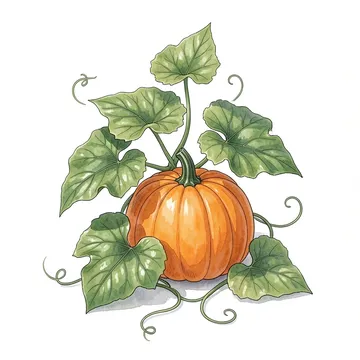
| Pumpkin | Pumpkin leaves shade the soil and smother weeds; the trio out-yielded single crops in trials. | Proven | source |
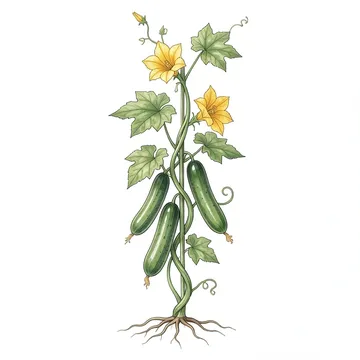
| Cucumber | Corn stalks serve as natural trellises for small vining pickling cucumbers. | Practical | source |
| Lettuce | Lettuce can grow in corn's shade, which delays midsummer bolting. | Practical | source |
| Radish | Radishes sown between young corn are harvested before the corn shades them. | Practical | source |
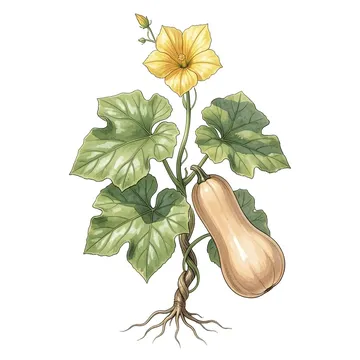
| Winter squash | Large squash leaves shade the ground under corn, keeping soil moist and weeds down. | Practical | source |
| Cantaloupe (melon) | Melons are a traditional corn companion; no trial yet. | Traditional | source |
| Parsley | Parsley is an old corn companion; untested — try it and see. | Traditional | source |
| Peas | Peas are a traditional corn partner; no trial evidence. | Traditional | source |
| Potato | Early potatoes are a traditional corn companion; no trial yet. | Traditional | source |
| Spinach | Spinach is a traditional corn companion; no trial evidence. | Traditional | source |
| Sunflower | A traditional pairing; sunflower is said to trap aphids, but that's unproven. | Traditional | source |
| Watermelon | Melons are an old corn companion; no trial yet. | Traditional | source |
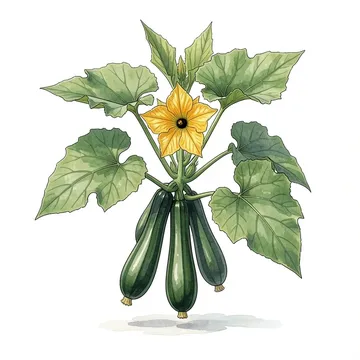
| Zucchini (summer squash) | Squash is a traditional corn partner; summer squash hasn't been trialed with it. | Traditional | source |
Keep apart
| Plant | Why | Evidence | |
|---|---|---|---|
| Tomato | Corn earworm also attacks tomatoes as tomato fruitworm, so keep them apart. | Practical | source |
Proven Backed by a field trial or published study. Practical Recommended by a university extension or the RHS, with a clear reason. Traditional Gardener lore; no trial found yet.
What to Plant With Corn
The Three Sisters partners
- Beans — Proven. Pole beans climb the corn stalks, and in Cornell trials the full Three Sisters planting gave more food energy and protein per area than monocultures.
- Pumpkin — Proven. Its leaves shade the soil and smother weeds; the maize, bean and pumpkin intercrop out-yielded single crops per area.
- Winter squash — Practical. Large leaves shade the ground, hold moisture and suppress weeds under the corn, though squash still competes for nutrients.
Using the stalks
- Cucumber — Practical. Small vining pickling types can climb corn stalks as a natural trellis.
Using the shade
- Lettuce — Practical. Grown in the shade of corn rows, lettuce is slower to bolt in midsummer.
- Radish — Practical. Sow between young corn and harvest before the canopy closes.
Chart listings without a mechanism (Traditional): peas, early potato, cantaloupe, watermelon, zucchini, spinach, parsley and sunflower.
What Not to Plant With Corn
- Tomato — Practical. Corn earworm is the same insect as the tomato fruitworm, according to University of Florida entomologists, and NDSU lists the two crops as enemies. Grouping them gives one pest two hosts side by side. Grow tomatoes in a different bed.
That is the only foe in our data. Corn is also a heavy, tall crop, so think about shade: anything that needs full sun belongs on the south side of the corn block, not the north.
Corn Companion Plants in a Three Sisters Block
A Three Sisters planting is laid out as a block of short rows rather than one long row, which gives the beans plenty of stalks to climb and the squash room to run. A simple version:
- Plant corn 8–12 in (20–30 cm) apart in rows about 36 in (90 cm) apart.
- Sow pole beans at the base of the corn so they use the stalks as poles.
- Plant pumpkin or winter squash between the rows, where the vines can run and cover the soil.
The University of Minnesota adds a claimed bonus: the tangle of corn and beans may act as a visual deterrent to squash vine borer. That claim is not trial-backed, so treat it as a possible extra rather than the reason to plant. See the Three Sisters guide for full plans and plant counts.
| Partner | Spacing | Role |
|---|---|---|
| Sweet corn | 8–12 in (20–30 cm) | Living pole |
| Pole beans | 6–12 in (15–30 cm) along supports | Climber |
| Winter squash | 48–60 in (120–150 cm) | Ground cover |
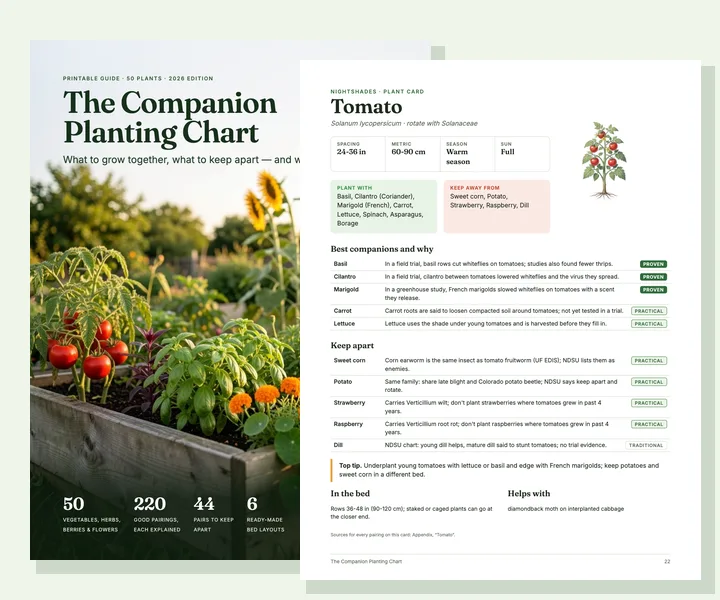
Free printable PDF
Get the complete companion planting chart
The PDF includes a Three Sisters plan drawn to scale with plant counts for each crop, so you can print it and mark out the corn block before sowing.
- 1-page fridge chart + full 50 × 50 matrix
- 50 plant cards with spacing and reasons
- 6 bed plans drawn to scale
- US Letter and A4
Flowers That Help Corn
University of Minnesota work found that planting flowering plants such as buckwheat, cowpea and sunn hemp with sweet corn increased the predators and parasitoids of corn earworm. None of these are among the 50 plants we profile, but the principle is worth using: a flowering strip near the corn feeds the insects that attack its main pest. It is the closest thing to a tested pest-control companion that corn has.
Does It Really Work?
For corn, more than for most crops. The Three Sisters yield advantage comes from trials, and the corn earworm link to tomatoes is a documented pest fact, not a rule of thumb. The many chart pairings, from melons to parsley, have no evidence behind them. Start with beans and squash, keep tomatoes away, and treat the rest as optional. More context is in does companion planting work.
Frequently asked questions
What are the Three Sisters in gardening?
The Three Sisters is an Indigenous planting system of corn, climbing beans and squash or pumpkin grown together. Beans climb the corn stalks and squash leaves shade the soil and smother weeds. Cornell trials found the combination produced more food energy and protein per area than growing each crop alone.
What to plant with corn?
Pole beans and pumpkin or winter squash are the strongest choices, backed by Three Sisters trials. Small pickling cucumbers can climb the stalks, and lettuce or radish can grow in the shade between rows. Charts also list peas, early potatoes, melons, spinach, parsley and sunflowers without trial evidence.
What should you not plant near corn?
Keep tomatoes away from corn. The corn earworm is the same insect as the tomato fruitworm, so the two crops share a pest. NDSU lists them as enemies and University of Florida entomologists document the shared pest. Plant tomatoes in a separate bed, ideally not right beside the corn block.
Can you plant cucumbers with corn?
Yes, especially small vining pickling cucumbers. Extension sources note that corn stalks can serve as a natural trellis for them, which saves ground space. Give cucumbers enough sun by planting them on the sunny edge of the corn block rather than deep inside it.
Can lettuce grow under corn?
Yes. Lettuce grown in the shade of corn rows tends to bolt later in midsummer heat, according to extension sources. Sow it between rows once the corn is tall enough to cast shade, and harvest leaves before the corn canopy becomes too dense.