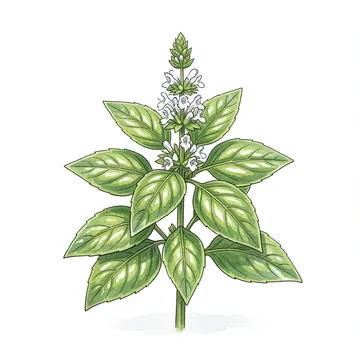
Herbs
Mint Companion Plants
By the editorial team · Updated 2026-11-19 · Every pairing linked to its source
Quick answer. Mint companion plants are cabbage, broccoli, kale and tomatoes, all chart-listed for scent-based pest claims that no trial has tested. No source lists a foe, but mint is the problem itself: it spreads by underground rhizomes. Never plant it loose in a bed. Set it in a pot, or a bottomless pot sunk in the soil.
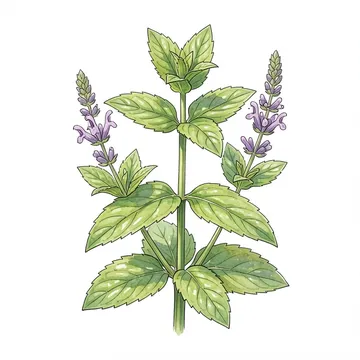
- Spacing
- 8-10 in · 20-25 cm
- Season
- Perennial
- Sun
- Partial
- Rotate with
- Lamiaceae
Mint companion plants advice comes with a warning that outweighs everything else on the list. Mint spreads by rhizomes, underground stems that run through a bed and come up far from where you planted. Oregon State's chart puts it plainly: use carefully, very aggressive.
That does not mean mint has no place near vegetables. Several extension charts list it beside cabbage-family crops and tomatoes, mostly for its scent. The answer is containment. Grow mint in a pot set next to the bed, and you can test those claims without losing the bed to mint.
Mint companion chart
Good companions
| Plant | Why | Evidence | |
|---|---|---|---|
| Cabbage | Mint is said to deter cabbage moths; grow it in a pot beside the bed. | Traditional | source |
| Tomato | Mint is said to keep tomatoes healthier; untested, so keep mint in a pot. | Traditional | source |
| Broccoli | Traditionally said to help broccoli, but mint is very aggressive; contain it. | Traditional | source |
| Kale | Mint is traditionally said to help kale; untested, and best kept in a pot. | Traditional | source |
Keep apart
No well-documented conflicts. See the notes below for general cautions.
Proven Backed by a field trial or published study. Practical Recommended by a university extension or the RHS, with a clear reason. Traditional Gardener lore; no trial found yet.
What to Plant With Mint
All mint pairings are Traditional: chart listings without trials.
Cabbage family
- Cabbage — UF, NDSU and Oregon State list mint to deter cabbage moth. The best way to use it is a pot beside the bed.
- Broccoli — Oregon State lists mint as enhancing cole crops, with its own warning that mint is very aggressive.
- Kale — Also listed with cole crops by Oregon State.
Tomatoes
- Tomato — The UF herb chart and NDSU list mint near tomatoes, claiming improved plant health; untested.
Mint likes moist soil and tolerates part shade, according to Texas A&M. A pot placed on the shadier side of a brassica bed suits it.
All four partners are listed because of scent claims. None of the charts suggests that mint changes the yield or flavor of the crops beside it, so think of it as an experiment you can run cheaply in a pot.
What Not to Plant With Mint
No chart we used lists a specific plant that should not grow near mint. The issue is the reverse: almost nothing should grow inside a patch of loose mint, because the rhizomes crowd out neighbors.
- Do not plant mint directly in a vegetable bed.
- Do not put it in a shared container with other herbs; it will take over the pot.
- Do keep it apart from Mediterranean herbs such as thyme, rosemary and lavender, which want dry soil while mint wants moist.
That last point is about needs rather than any chemical conflict. Watering mint the way it likes would rot a lavender beside it.
Mint Companion Plants in Pots: The RHS Method
The RHS recommends growing mint in a container or in a bottomless pot sunk into the soil. Both methods keep the rhizomes from escaping:
- Pot beside the bed. Set a pot of mint at the end or edge of a cabbage or tomato bed. You get the scent close to the crop with no spread.
- Sunk bottomless pot. Sink a pot with its base removed into the bed. The walls stop the sideways runners that cause the trouble.
- Repot every few years. The RHS advises dividing and repotting mint every few years so it stays vigorous.
| Setup | Spacing | Notes |
|---|---|---|
| Mint, Texas A&M | 8–10 in (20–25 cm) | Only inside a container |
| Cabbage | 12–18 in (30–45 cm) | In the bed |
| Tomato | 24–36 in (60–90 cm) | In the bed |
The top tip from our sources sums it up: never plant mint loose in a vegetable bed; set potted mint beside cabbage-family crops for the scent without the takeover.
Free printable PDF
Get the complete companion planting chart
The PDF's bed plans mark exactly where a potted mint sits beside the cabbage rows, so you get the layout without risking a bed full of runners.
- 1-page fridge chart + full 50 × 50 matrix
- 50 plant cards with spacing and reasons
- 6 bed plans drawn to scale
- US Letter and A4
Choosing a Spot for Potted Mint
Mint tolerates part shade and likes moist soil, so the best spot for its pot is often the least useful corner of a vegetable plot: the shady end of a bed or the space beside taller crops. That lets the pot sit near cabbage or tomatoes without taking prime growing space.
If mint starts to look tired after a few years in the same container, follow the RHS advice to lift, divide and repot it. Spearmint and peppermint are both grown this way; the containment rule applies to every kind of mint you plant.
Does It Really Work?
The claims that mint deters cabbage moth, cabbage maggot or ants come from extension charts, and none has been tested. What is certain is mint's spreading habit, documented by both the RHS and Oregon State. Grow it in a pot near cabbage or tomatoes if you like the idea, and judge the result in your own garden.
Frequently asked questions
Why do gardeners not like mint?
Because it spreads. Mint grows from rhizomes, underground stems that run through soil and pop up far from the original plant. Oregon State's chart calls it very aggressive. Planted loose in a bed, it can crowd out vegetables, which is why the RHS recommends containers.
What cannot be planted near mint?
No chart we used lists a specific foe for mint. The problem is mint's spread, so nothing should share open soil with it. Also keep it apart from thyme, rosemary and lavender, which need dry soil while mint prefers moist ground.
Are mint and thyme companion plants?
They are not listed as companions or foes in our sources, but their needs clash. Mint likes moist soil and spreads by runners; thyme needs sharp drainage. Grow mint in its own pot and plant thyme at a dry bed edge, so each gets the conditions it prefers.
Does mint attract bees?
Our sources do not list mint as a pollinator plant, so we cannot say how much it helps. Its listed companion uses are scent-based claims about cabbage moth, cabbage maggot and ants, all untested. For a reliable bee plant near vegetables, borage or flowering oregano have better support.
What vegetables can you plant with mint?
Cabbage, broccoli, kale and tomatoes are listed as mint companions by UF, NDSU and Oregon State charts. Keep the mint in a pot or a sunk bottomless pot beside those crops rather than planting it in the bed, so its rhizomes cannot spread.