Corn & okra
Okra Companion Plants
By the editorial team · Updated 2026-11-19 · Every pairing linked to its source
Quick answer. Okra companion plants include peppers, which shelter in its light shade, plus basil, cilantro and sunflowers for pollinators and beneficial insects. Fit quick lettuce or peas in before okra fills out. Keep squash away: both crops build up root-knot nematodes. Marigolds help only as a dense crop grown months beforehand.
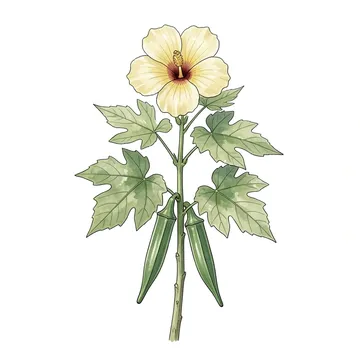
- Spacing
- 12-18 in · 30-45 cm
- Season
- Warm season
- Sun
- Full
- Rotate with
- Malvaceae
Okra companion plants advice is mostly garden lore, with one useful piece of science underneath it: okra is a host for root-knot nematodes. That single fact explains the main warning on this page and the right way to use marigolds.
Okra is a tall, warm-season plant spaced 12–18 in (30–45 cm) apart, so it shapes the bed around it. Shorter crops can use its shade and the cool weeks before it fills in. The pairings below carry a Traditional label because they come from gardening sources rather than trials.
Okra companion chart
Good companions
| Plant | Why | Evidence | |
|---|---|---|---|
| Basil | A traditional pairing; basil is said to repel mites and whiteflies, untested on okra. | Traditional | source |
| Cilantro (Coriander) | A traditional pairing; cilantro flowers attract hoverflies that eat aphids. | Traditional | source |
| Lettuce | Quick lettuce grows in okra's shade and is harvested before the okra matures. | Traditional | source |
| Marigold (French) | Okra is a nematode host; marigold helps only when grown as a crop before okra. | Traditional | source |
| Peas | Spring peas finish before okra needs the space. | Traditional | source |
| Pepper | Okra shelters peppers from wind, and peppers fit in its light shade. | Traditional | source |
| Sunflower | A traditional pairing; sunflowers draw bees that also visit okra flowers. | Traditional | source |
Keep apart
| Plant | Why | Evidence | |
|---|---|---|---|
| Winter squash | Squash builds up root-knot nematodes that also attack okra. | Traditional | source |
| Zucchini (summer squash) | Zucchini builds up root-knot nematodes that also attack okra. | Traditional | source |
Proven Backed by a field trial or published study. Practical Recommended by a university extension or the RHS, with a clear reason. Traditional Gardener lore; no trial found yet.
What to Plant With Okra
Crops that share the space
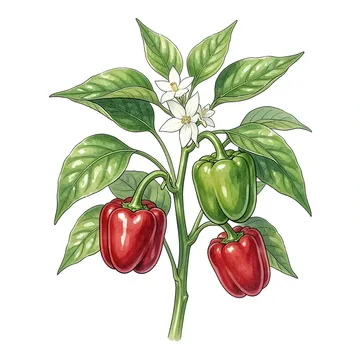
- Pepper — Traditional. Garden sources note that okra shelters peppers from wind and that peppers cope with its light shade. Both are warm-season crops planted at the same time.
- Lettuce — Traditional. A quick lettuce grows in the okra's shade and is picked before the okra matures.
- Peas — Traditional. Spring peas finish before okra needs the room.
Herbs and flowers
What Not to Plant With Okra
- Zucchini and winter squash — Traditional. Gardening sources warn that squash increases root-knot nematodes, which also attack okra. Putting the two together, or one after the other in the same spot, feeds the same pest.
- Sweet potato — sources disagree. Some pair it with okra and others do not, so we list it as neither friend nor foe. If nematodes are already a problem in your soil, keep it separate to be safe.
If you grow squash and okra, put them in different beds and do not follow one with the other. The crop rotation guide shows how to space them across seasons.
Marigolds and Root-Knot Nematodes
The University of Florida's guidance on marigolds is specific. French marigold suppresses root-knot nematodes only when grown as a dense block for two months or more before the vegetable goes in. A few marigolds dotted between okra plants are not expected to do the job.
If nematodes have damaged okra or squash in a bed before:
- Sow French marigold densely, less than 7 in (18 cm) apart, as a solid block where next season's okra will go.
- Let it grow for at least two months.
- Then plant okra into that ground.
This is a pre-crop, not a companion in the usual sense. See the marigold page for which marigold types work and which do not.
Okra Companion Planting Chart
| Plant | With okra? | Reason | Evidence |
|---|---|---|---|
| Pepper | Yes | Wind shelter, light shade | Traditional |
| Lettuce | Yes, early | Harvested before okra fills in | Traditional |
| Peas | Yes, early | Finished by summer | Traditional |
| Basil | Yes | Claimed pest benefit, untested | Traditional |
| Cilantro | Yes | Hoverfly flowers | Traditional |
| Sunflower | Yes | Bees | Traditional |
| Marigold | As a pre-crop | Nematodes, dense block only | Traditional |
| Squash | No | Shared nematodes | Traditional |
Okra wants full sun and rows about 36 in (90 cm) apart; it gets tall, so place it on the north side of shorter crops.
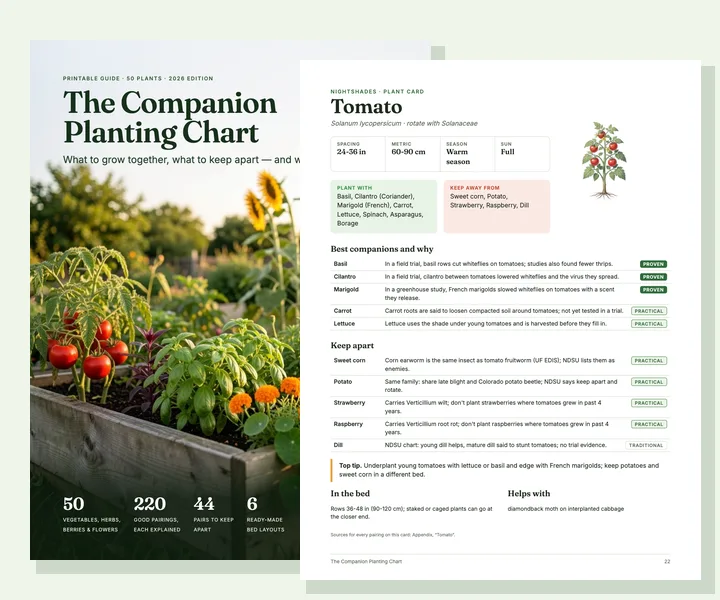
Free printable PDF
Get the complete companion planting chart
The PDF's okra card and rotation sheet show where okra, squash and a marigold pre-crop belong across two seasons, ready to print and pin up.
- 1-page fridge chart + full 50 × 50 matrix
- 50 plant cards with spacing and reasons
- 6 bed plans drawn to scale
- US Letter and A4
A Summer Bed Built Around Okra
Okra is planted into warm soil and grows tall through the hottest part of summer, so a bed built around it has two phases.
- Spring phase: sow peas and a quick lettuce in the spot. Both are finished before okra needs the space.
- Summer phase: set okra 12–18 in (30–45 cm) apart, with peppers on the sunny side and a few basil plants at the bed ends.
- Edges: let some cilantro flower for hoverflies, and put sunflowers on the north side where their height will not shade anything.
This arrangement keeps the bed productive from spring onward without asking okra to share root space with squash.
Does It Really Work?
The friendly pairings for okra are garden lore without trials. The nematode logic is better grounded: okra is a host, and the marigold method has University of Florida guidance behind it, as long as you follow the dense pre-crop approach. Act on the nematode advice first and treat the rest as reasonable bed planning.
Frequently asked questions
What should be avoided with okra?
Avoid planting okra next to or after squash, including zucchini and winter squash. Gardening sources warn that squash increases root-knot nematodes, which also attack okra. Advice on sweet potatoes conflicts, so keep them apart if nematodes are already a problem in your soil.
What grows well with okra?
Peppers do well beside okra, which shelters them from wind. Basil, cilantro and sunflowers bring beneficial insects and pollinators, and quick crops such as lettuce or peas can be grown and harvested before the okra fills in. These are traditional pairings rather than tested ones.
Do marigolds help okra?
Only when used the right way. University of Florida guidance says French marigold suppresses root-knot nematodes when grown as a dense block for two months or more before planting. A few marigolds between okra plants are not expected to control nematodes.
Can okra and peppers be planted together?
Yes. Garden sources note that okra protects peppers from wind and that peppers tolerate its light shade. Both are warm-season crops that want full sun. Space okra 12–18 in (30–45 cm) apart and set peppers on the sunnier side.
How far apart should okra be planted?
Space okra plants 12–18 in (30–45 cm) apart in rows about 36 in (90 cm) apart. The plants grow tall, so put them on the north side of shorter crops to avoid shading them, and use the gaps early in the season for quick lettuce or peas.