Leafy greens & perennials
Swiss Chard Companion Plants
By the editorial team · Updated 2026-11-19 · Every pairing linked to its source
Quick answer. Good Swiss chard companion plants are bush or pole beans, onions and cabbage-family crops such as cabbage, kale and broccoli. No chart we checked lists a plant to keep away from chard. Space chard 6–8 in (15–20 cm) apart and use it to fill gaps, since it tolerates some shade and heat.
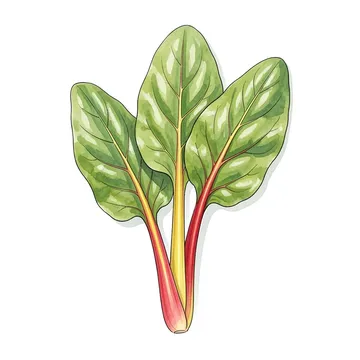
- Spacing
- 6-8 in · 15-20 cm
- Season
- Cool season
- Sun
- Partial
- Rotate with
- Amaranthaceae (formerly Chenopodiaceae)
Swiss chard companion plants are less about chemistry and more about timing and space. Chard stands in the bed from cool spring weather into summer heat, so it can share ground with crops that come and go around it.
Few sources have studied chard pairings at all. The suggestions below come from university extension charts, and we label them as Traditional because nobody has trialed them. What chard does offer is flexibility: it copes with partial shade and some heat, which lets you tuck it where fussier greens would struggle.
Swiss chard companion chart
Good companions
| Plant | Why | Evidence | |
|---|---|---|---|
| Beans (bush & pole) | Beans are a traditional chard companion; no trial yet. | Traditional | source |
| Cabbage | The cabbage family is an old chard partner; untested — try it and see. | Traditional | source |
| Onion | Onions are a traditional chard companion; no trial evidence. | Traditional | source |
Keep apart
No well-documented conflicts. See the notes below for general cautions.
Proven Backed by a field trial or published study. Practical Recommended by a university extension or the RHS, with a clear reason. Traditional Gardener lore; no trial found yet.
What to Plant With Swiss Chard
Legumes on one side
- Beans — Traditional. Charts from North Dakota State and the University of Florida list beans beside chard. Bush beans stay low enough that they do not shade the chard, and both crops are picked over a long season.
Alliums along the edge
- Onion — Traditional. The NDSU chart pairs onions with chard. Onions are narrow and upright, so a row of them fits between chard plants without competing for light.
Cabbage-family neighbors
- Cabbage — Traditional. The UC Davis chart lists chard with the cabbage family.
- Kale and Broccoli — same family as cabbage, so the same chart listing applies. They share chard's cool-season timing.
A simple layout: a row of onions down the middle of a bed, chard on one side, a cabbage-family crop on the other, and a short row of bush beans once the soil warms.
What Not to Plant With Swiss Chard
None of the extension charts behind this page names a bad companion for chard. That is an honest gap rather than a guarantee: it means nobody has flagged a problem, not that every pairing is ideal.
The one practical caution is rotation. Chard belongs to the Amaranthaceae family, the same group as beet and spinach. If you rotate crops by family, treat chard, beets and spinach as one group and avoid growing them in the same spot year after year. See the crop rotation guide for a simple four-bed plan.
Using Chard as a Filler Crop
The University of Wisconsin and Kansas State material treats chard as a flexible plant, and that is its real companion skill. Because it tolerates partial shade, you can set chard on the shadier side of taller crops. Because it handles warmth better than spinach or lettuce, it keeps producing when those cool-season greens have finished.
- Spacing: 6–8 in (15–20 cm) between plants, rows 18–24 in (45–60 cm) apart.
- Sun: partial shade is fine.
- Season: cool-season start, long harvest.
Pick outer leaves and the plant keeps growing, so one sowing can hold a corner of the bed for months while companions rotate around it.
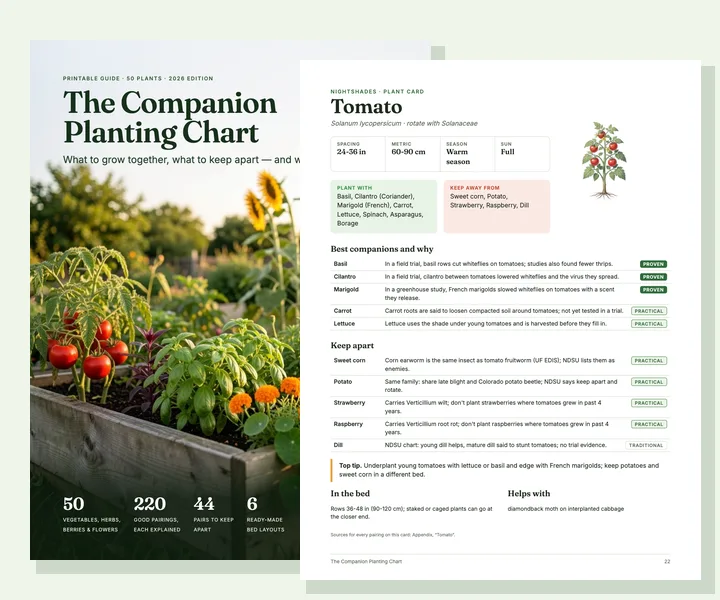
Free printable PDF
Get the complete companion planting chart
The PDF puts chard on a printable card with its spacing and rotation group, plus a bed plan that shows where a shade-tolerant filler earns its space.
- 1-page fridge chart + full 50 × 50 matrix
- 50 plant cards with spacing and reasons
- 6 bed plans drawn to scale
- US Letter and A4
Swiss Chard Companion Plants at a Glance
| Companion | Role next to chard | Spacing of the companion | Evidence |
|---|---|---|---|
| Bush beans | Low summer row beside chard | 3–5 in (8–12 cm) | Traditional |
| Onion | Narrow edging between chard plants | 3–4 in (8–10 cm) | Traditional |
| Cabbage | Cool-season neighbor in the next row | 12–18 in (30–45 cm) | Traditional |
| Kale | Cool-season neighbor, harvested leaf by leaf like chard | 8–12 in (20–30 cm) | Traditional |
The spacing column matters more than it looks. Onions and beans sit close together, so a single row of either takes a narrow strip, while cabbage needs a wide one. Matching those widths is how you fit chard and three partners into one bed without anything getting smothered.
One more pattern from the Wisconsin material: because chard is slow to bolt and can be cut for months, it can hold the corners and ends of a bed while short crops are sown and harvested in the middle. That makes it a steady anchor for succession planting rather than a plant you pull after one harvest.
Does It Really Work?
For chard, the honest answer is that there is no trial data either way. The pairings here are chart listings with no stated mechanism, so expect no pest-control miracle. What does work is the practical side: chard fills shade and summer gaps that other greens leave empty, and that alone earns it a place next to beans, onions and brassicas. For the bigger picture, read does companion planting work.
Frequently asked questions
What pairs well with Swiss chard?
Beans, onions and cabbage-family crops such as cabbage, kale and broccoli are the companions listed for chard in North Dakota State, University of Florida and UC Davis charts. These are traditional pairings without trial data. They work in practice because the plants differ in height and shape, so they share a bed without crowding each other.
Can you plant Swiss chard and kale together?
Yes. The UC Davis chart lists chard with the cabbage family, and kale belongs to that family. Both are cool-season crops with similar timing. Give each chard plant 6–8 in (15–20 cm) and leave enough room for the kale to spread, since crowded leaves dry slowly and stay damp.
What not to plant near Swiss chard?
No extension chart we checked lists a bad companion for Swiss chard. The main thing to avoid is planting it where beets or spinach grew last year, because all three are in the same plant family. Rotating that family to a new spot each season is the sensible precaution.
Does Swiss chard grow in shade?
Chard tolerates partial shade, which is why it makes a useful filler. You can plant it on the shady side of taller crops where sun-hungry vegetables would struggle. It also copes with some summer heat, so it keeps producing after spinach and lettuce have finished for the season.
How far apart should Swiss chard be planted?
Space chard plants 6–8 in (15–20 cm) apart in rows 18–24 in (45–60 cm) apart. That leaves room for a companion row of onions or bush beans between chard rows if you want to make the most of a small bed, and it gives each chard plant enough air around its broad leaves.