Leafy greens & perennials
Asparagus Companion Plants
By the editorial team · Updated 2026-11-19 · Every pairing linked to its source
Quick answer. The classic asparagus companion plants are tomatoes, parsley and basil, planted along the edge of the permanent bed. Keep onions away: a University of Florida chart lists them as incompatible. Avoid sites near black walnut, whose juglone affects asparagus. Pot marigold is also said to deter asparagus beetles.
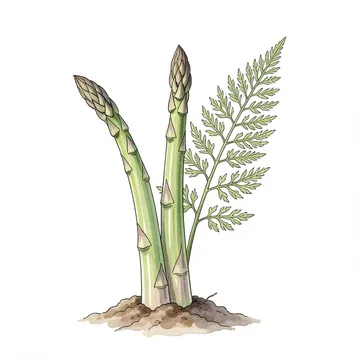
- Spacing
- 18-24 in · 45-60 cm
- Season
- Perennial
- Sun
- Full
- Rotate with
- Asparagaceae
Asparagus companion planting is different from most vegetables because the asparagus never moves. Crowns go in about 8 in deep and the bed stays for years, so every companion is a guest that comes and goes around a permanent host.
That makes the edge of the bed the place to work. Annual herbs and tomatoes can line the sides each summer without disturbing the crowns. The pairings below are chart-based, so they carry a Traditional label, but the planning advice about permanence and black walnut comes from Purdue and University of Wisconsin material.
Asparagus companion chart
Good companions
| Plant | Why | Evidence | |
|---|---|---|---|
| Basil | A traditional pairing; basil is said to distract asparagus beetles, but that's untested. | Traditional | source |
| Parsley | A classic asparagus companion; the idea that it repels beetles is untested. | Traditional | source |
| Tomato | A classic pairing; the idea that tomatoes repel asparagus beetles is untested. | Traditional | source |
Keep apart
| Plant | Why | Evidence | |
|---|---|---|---|
| Onion | Tradition keeps onions away from asparagus; no reason has been documented. | Traditional | source |
Proven Backed by a field trial or published study. Practical Recommended by a university extension or the RHS, with a clear reason. Traditional Gardener lore; no trial found yet.
What to Plant With Asparagus
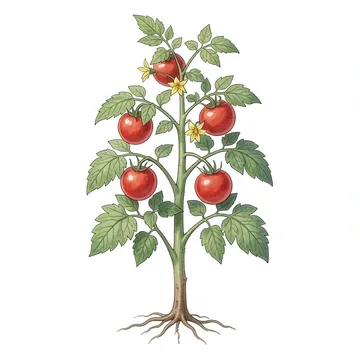
- Tomato — Traditional. The best-known pairing, listed by UC Davis and NDSU. The idea that tomatoes repel asparagus beetle has not been tested, so plant tomatoes for the use of space, not for pest control.
- Parsley — Traditional. Listed by UC Davis and NDSU. The claim that it repels beetles is also untested. Parsley stays low and suits the bed edge.
- Basil — Traditional. Listed by UC Davis and NDSU; an Oregon State herb list says it may distract asparagus beetles. Basil is a warm-season annual, so it fills the edge while asparagus ferns grow in summer.
- Pot marigold (Calendula) — Traditional. NDSU material says it deters asparagus beetles. It is not one of the plants we profile, and the claim has no trial behind it.
Plant all of these along the sides of the bed rather than between crowns, so you never dig near the asparagus roots.
What Not to Plant With Asparagus
- Onion — Traditional. The University of Florida chart lists onion as incompatible with asparagus, and the onion page lists asparagus as a bad partner in return. No mechanism is documented, but it is an easy rule to follow.
- Black walnut — not a garden companion, but important for siting. Purdue and University of Wisconsin publications report that juglone from black walnut affects asparagus. Keep a new asparagus bed well away from walnut trees and their roots.
Planning Companions Around a Permanent Bed
Because asparagus stays put, plan its companions as a border system:
- Spacing: crowns 18–24 in (45–60 cm) apart, rows about 48 in (120 cm) apart.
- Depth: crowns about 8 in deep.
- Sun: full sun.
- Where companions go: a strip along each long side for tomatoes, parsley or basil.
This keeps annual digging away from the crowns and leaves the asparagus undisturbed between harvests. It also means you can rotate the edge crops from year to year even though the asparagus never moves. Compare other perennial beds in the garden layouts guide.
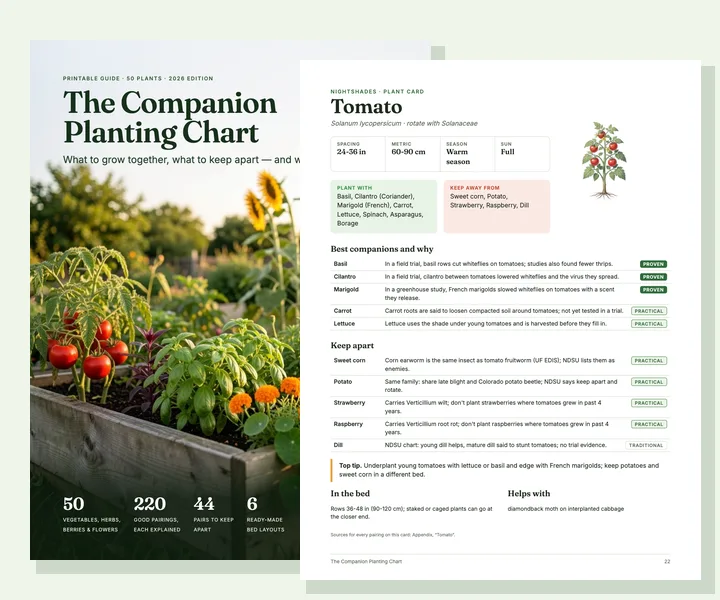
Free printable PDF
Get the complete companion planting chart
Print the asparagus card and the perennial-bed plan from the PDF to mark where crowns stay and where the summer edge crops go each year.
- 1-page fridge chart + full 50 × 50 matrix
- 50 plant cards with spacing and reasons
- 6 bed plans drawn to scale
- US Letter and A4
Asparagus Companion Planting Through the Year
Because the bed is permanent, companions change with the season while the asparagus stays:
- Spring: the asparagus is cut. Leave the bed edges clear so you can walk in without trampling young companions.
- Early summer: set tomato transplants and sow basil along the sunny edges. Both are warm-season crops, so they go in once the soil has warmed.
- All season: parsley can stay at the bed edge; it is a cool-season biennial that sits low at the edge all season.
- Fall: clear the tomatoes and basil, and keep the crowns undisturbed.
| Companion | Its spacing | Notes |
|---|---|---|
| Tomato | 24–36 in (60–90 cm) | Only along the edge, never between crowns |
| Basil | 12 in (30 cm) | Pinch often to keep bushy |
| Parsley | 6–12 in (15–30 cm) | Leave one to flower in year two |
This seasonal rhythm is the real reason the pairing works for many gardeners: the edge crops use ground and light that would otherwise sit idle after the spear harvest.
Does It Really Work?
The famous tomato and asparagus pairing is a chart listing, and the beetle-repellent claims for tomato, parsley and basil remain untested. What is well supported is the siting advice: keep asparagus away from black walnut and design the bed so companions never disturb the crowns. Use the pairings for space, and do not count on them for beetle control.
Frequently asked questions
What should I not plant with asparagus?
Keep onions away from asparagus. The University of Florida chart lists them as incompatible in both directions, though no reason is documented. Also avoid planting asparagus near black walnut trees: Purdue and University of Wisconsin publications report that juglone from black walnut affects asparagus.
What is the best companion plant for asparagus?
Tomatoes are the classic choice, listed by UC Davis and NDSU, with parsley and basil close behind. All three are traditional pairings. Plant them along the edge of the asparagus bed so you never dig near the crowns, and do not rely on them for beetle control.
Do tomatoes keep asparagus beetles away?
That claim is repeated widely, but it has not been tested. UC Davis and NDSU list tomatoes as asparagus companions without a proven pest effect. Grow tomatoes beside asparagus for the use of space, and check the ferns for beetles regardless.
How far apart should asparagus crowns be planted?
Set crowns 18–24 in (45–60 cm) apart and about 8 in deep, with rows roughly 48 in (120 cm) apart. The bed is permanent, so leave a strip along each side for annual companions such as parsley, basil or tomatoes, which you can rotate each year without disturbing the crowns.
What vegetables can grow with asparagus?
Tomatoes are the main vegetable listed as an asparagus companion in UC Davis and NDSU charts; parsley and basil are the herbs most often paired with it. Keep onions in another bed. Because asparagus is perennial, plant these annual partners at the bed edge each year after the spear harvest ends.